
Updated on February 19, 2026
Sleep optimization is not about chasing eight hours on a clock. It’s about improving the biological depth and structure of your sleep so your body can actually recover.
Deep, restorative sleep is when cellular repair accelerates, inflammatory pathways calm down, hormones rebalance, and your brain performs its nightly cleanup. Without intentional sleep optimization, even long nights in bed can leave you metabolically stressed and cognitively foggy.
Modern life has created a paradox: we are exhausted, yet biologically overstimulated. The solution is not more stimulation — it is better alignment. True sleep optimization means understanding your sleep architecture, respecting your circadian rhythm, and removing the subtle disruptors that sabotage recovery.
Why Sleep Quality Matters (Not Just Quantity)
For decades, public health messaging focused on sleep duration. But sleep optimization research now makes one thing clear: quality governs recovery, not just quantity.
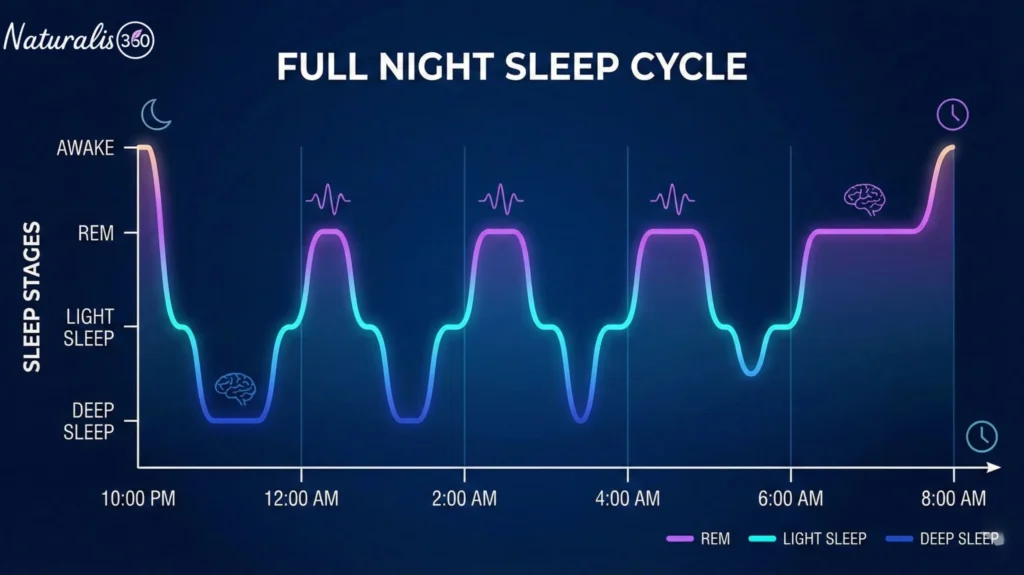
Each night, your brain cycles through light sleep, deep sleep (slow-wave sleep), and REM sleep in 90-minute waves. These stages are not interchangeable. They serve distinct biological purposes, and compromising one stage alters the entire recovery equation.
Deep sleep is your body’s physical repair window. Growth hormone is released. Tissue repair increases. The immune system recalibrates. Inflammatory signals decline. Without sufficient deep sleep, your body accumulates microscopic stress that compounds over time.
REM sleep, on the other hand, is neurological recalibration. Emotional processing stabilizes. Memory consolidates. Creativity and cognitive flexibility reset. Chronic REM suppression has been linked to mood instability and stress sensitivity.
Sleep optimization therefore means protecting the integrity of these cycles. It means ensuring that the architecture of your sleep remains intact — not fragmented by stress, light exposure, or metabolic disturbance.
Understanding Your Circadian Rhythm
Sleep optimization is inseparable from circadian biology.
Your circadian rhythm is a 24-hour internal timing system influenced primarily by light exposure. It governs melatonin release, cortisol rhythm, body temperature fluctuation, digestive timing, and metabolic efficiency.
When aligned, cortisol rises in the morning, giving you clarity and energy. Melatonin rises naturally at night, signaling the brain that recovery mode should begin.
When misaligned, everything feels off:
- you feel tired but wired
- you wake up groggy
- sleep onset becomes unpredictable
- nighttime awakenings increase
Sleep optimization begins by stabilizing circadian cues — especially light timing.
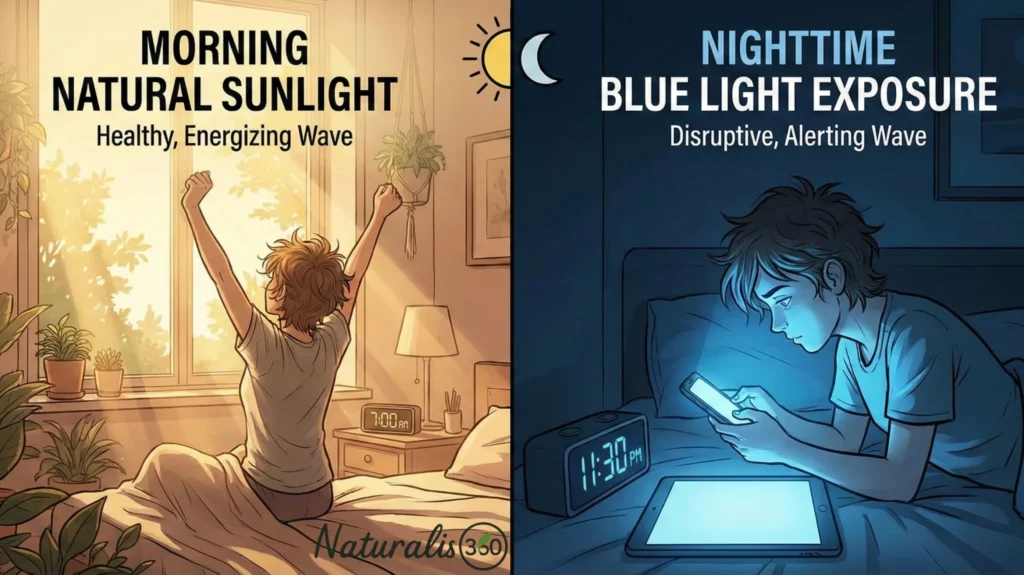
Morning sunlight exposure acts as a biological anchor. Even 10–15 minutes outdoors shortly after waking strengthens melatonin timing 12–16 hours later. Conversely, bright artificial light at night delays melatonin release and pushes the sleep window later.
This is why circadian alignment often improves sleep quality more than supplements ever could.
Common Sleep Disruptors (Screens, Caffeine, Stress)
Sleep optimization requires identifying what is quietly disrupting your system.
Screens and Blue Light
Blue light suppresses melatonin significantly — especially when exposure occurs within two hours of bedtime. The effect is not just psychological stimulation; it is hormonal delay. Your brain literally believes it is earlier in the day.
Reducing light intensity and shifting toward warmer tones after sunset is one of the simplest sleep optimization strategies available.
Caffeine Timing
Caffeine’s half-life averages 5–8 hours, but genetic variation can extend this. An afternoon coffee can still circulate at bedtime, reducing deep sleep intensity even if you fall asleep quickly.
For optimal sleep optimization:
- stop caffeine 8–10 hours before bed
- assess total daily intake
- monitor how long it takes you to fall asleep
Chronic Stress
Elevated evening cortisol blocks melatonin release. Stress keeps the nervous system in sympathetic dominance — alert, vigilant, prepared.
This is why many high-performing individuals struggle with sleep optimization despite exhaustion. Their nervous system never fully powers down.
Breathing work, gentle stretching, journaling, or even light reading before bed helps transition into parasympathetic mode — the biological state where sleep optimization can occur.
Natural Habits to Optimize Sleep (Light, Timing, Routine)
While supplements can help, foundational habits build real sleep optimization.
Morning light exposure, consistent sleep windows, and reduced evening stimulation reinforce circadian alignment. Temperature also plays a role — your body needs a slight core temperature drop to initiate sleep. Cooler rooms tend to support deeper stages of sleep, though ideal temperature varies individually.
Consistency may be the most overlooked variable. Going to bed at dramatically different times confuses hormonal rhythm and fragments sleep cycles.
Sleep optimization thrives on predictability.
Supplements That Support Deep Sleep (Magnesium, L-Theanine, Melatonin)
Sleep optimization is habit-driven — but targeted supplementation can enhance recovery.
Magnesium
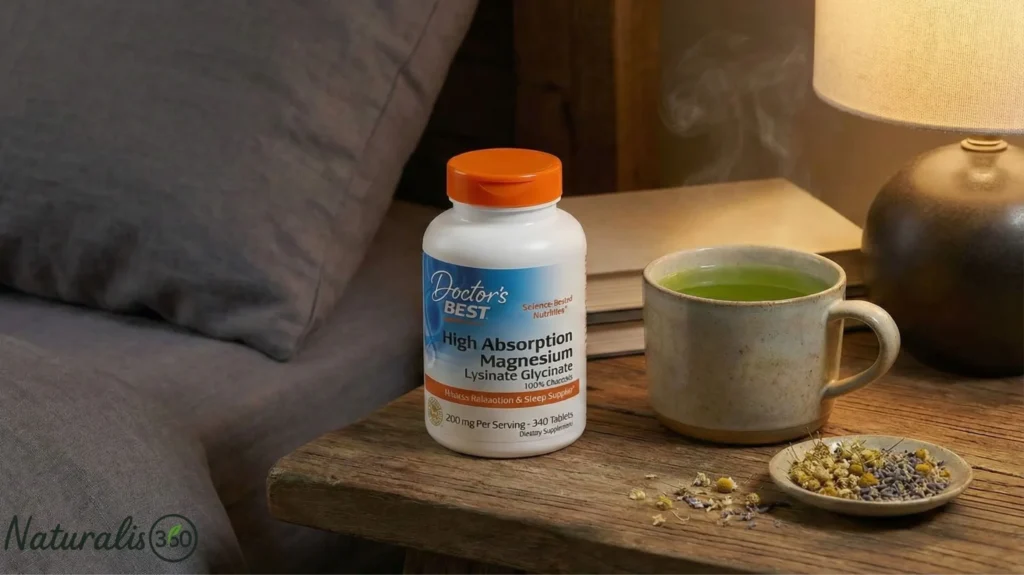
Magnesium supports GABA activity and muscular relaxation. Magnesium glycinate is often preferred because it is gentle and well tolerated.
If you want a deeper comparison:
📎Suggested reading: Magnesium Glycinate vs Citrate for Sleep (editar após a publicação do satélite)
L-Theanine
L-theanine promotes alpha brain wave activity associated with relaxed alertness. It does not sedate — it calms mental chatter.
Full breakdown here:
📎Suggested reading: L-Theanine for Sleep and Relaxation (editar após a publicação do satélite)
Melatonin
Melatonin is a circadian signal, not a sedative. It works best for rhythm correction — such as jet lag or temporary schedule shifts. Overreliance may reduce endogenous production.
Sleep optimization should prioritize rhythm correction before supplementation.
The Cellular Recovery Effect of Deep Sleep
During deep sleep, the glymphatic system activates — clearing metabolic waste from the brain. Growth hormone peaks. Insulin sensitivity improves. Mitochondrial repair accelerates.
Sleep optimization therefore impacts:
- metabolic health
- cognitive clarity
- immune resilience
- hormonal balance
- long-term longevity markers
Poor sleep accumulates biological stress silently. Optimized sleep compounds recovery.
Mitochondrial Health: The Hidden Key to Energy, Longevity, and Vitality
Sleep Optimization and Longevity
Chronic sleep disruption correlates with:
- cardiovascular risk
- metabolic dysfunction
- inflammatory load
- visceral fat accumulation
Conversely, consistent sleep optimization improves heart rate variability, stress resilience, and endocrine stability.
Sleep is not passive rest. It is active biological maintenance.
Practical Sleep Optimization Blueprint
If you prefer a simplified structure, here is a balanced sleep optimization framework:
- Morning sunlight daily
- Fixed sleep/wake window
- Caffeine cutoff early
- Dim lighting after sunset
- Cool sleep environment
- Evening wind-down ritual
- Magnesium if tension persists
- L-theanine if mind races
- Melatonin only for circadian reset
This is not a rigid prescription — it is a foundation.
Quantitative Insights: How Sleep Optimization Boosts Health and Longevity
Sleep optimization isn’t just a trendy term—it’s a real, measurable way to add years to your life and feel more energized every day. Recent studies show how simple changes, like getting morning sunlight or avoiding evening screen time, can improve the quality of your sleep cycles and lead to big health gains. For example, aligning your body’s internal clock with natural light can make your sleep deeper and more restorative, helping everything from your mood to your metabolism.
Let’s start with morning sunlight: It’s one of the easiest habits for sleep optimization. Research from 2025 found that for every 30 minutes extra of morning sun (before 10 a.m.), people adjust their sleep cycle about 23 minutes earlier, which improves overall sleep quality. This means less daytime fatigue and more efficient sleep at night.
In a 2024 study with professional athletes, more morning and daytime light was linked to longer total sleep time and a better subjective feeling of rest. In an experiment with college students, 1.5 hours of bright morning light boosted sleep efficiency from 80% to nearly 84%, reducing nighttime interruptions by about 11%.
These numbers show how natural light acts as a free and powerful tool to sync your hormones, like melatonin and cortisol, making sleep deeper without needing pills.
On the other hand, common sleep disruptors like blue light from screens at night have clear and measurable negative effects. A 2024 review showed that two hours of LED tablet use caused a 55% drop in melatonin levels and delayed the sleep hormone onset by 1.5 hours, compared to reading in low light.
Another 2025 study compared blue and red LED light: After two hours, blue light reduced melatonin to very low levels (about 7.5 pg/mL), while red allowed better recovery (26 pg/mL). This effect lingers, impacting deep sleep stages where your body repairs itself, and REM, which is key for memory.
In the long run, chronic exposure can reduce sleep efficiency by 5-10% per night, leading to more tiredness and health issues.
Supplements like magnesium glycinate also offer evidence-based support for those needing an extra push in sleep optimization. A 2025 randomized trial showed that magnesium bisglycinate reduced insomnia severity scores by nearly 4 points (compared to 2.3 with placebo), with a small but meaningful impact.
In a 2024 pilot study, it improved sleep duration, deep sleep time, and overall efficiency, plus helped with mood and heart rate variability. For older adults with insomnia, a 2012 study found that 500mg of magnesium increased sleep efficiency, total sleep time, and cut down the time to fall asleep.
These benefits come because magnesium helps relax muscles and the nervous system, promoting calmer sleep naturally.
The big payoff? Optimized sleep is directly linked to a longer, healthier life.
A 2023 study with over 172,000 adults revealed that people who follow five quality sleep factors (7-8 hours, regularity, no insomnia, no snoring, no daytime sleepiness) have:
- 30% lower overall mortality risk
- 21% lower heart disease death risk
- Gain up to 4.7 years of life expectancy for men
- 2.4 years for women
Just keeping consistent sleep times reduces overall mortality risk by 20-48% and heart issues by 22-57%.
2025 research emphasizes that sleep is the top behavioral factor for longevity, even surpassing diet or exercise.
An analysis of 5.8 million nights of sleep showed that consistent 7-8 hours lowers resting heart rate, a key marker of lasting health.
By prioritizing morning light, avoiding blue light, and using magnesium if needed, you’re not just sleeping better—you’re investing in years of vitality and well-being.
Final Thoughts – Balance Your Nights, Energize Your Days
Sleep optimization is the hidden multiplier behind energy, metabolic stability, emotional regulation, and recovery. When your circadian rhythm aligns and your sleep architecture is protected, daytime performance improves naturally.
You don’t need extreme interventions. You need biological alignment.
Discover natural formulations designed to reset your circadian rhythm and support restorative sleep.
Scientific References
Here’s the list of references used, with links to the original sources:
- de Menezes-Júnior, L. A. A., et al. (2025). The role of sunlight in sleep regulation: analysis of morning, evening and late exposure. PubMed.
https://pubmed.ncbi.nlm.nih.gov/41053799 - Stevenson, S., et al. (2024). Higher Levels of Morning and Daytime Light Exposure Associated with Positive Sleep Indices in Professional Team Sport Athletes. DovePress.
https://www.dovepress.com/higher-levels-of-morning-and-daytime-light-exposure-associated-with-po-peer-reviewed-fulltext-article-NSS - He, M., et al. (2023). Shine light on sleep: Morning bright light improves nocturnal sleep and next morning alertness among college students. PubMed.
https://pubmed.ncbi.nlm.nih.gov/36058557 - Schuster, J., et al. (2025). Magnesium Bisglycinate Supplementation in Healthy Adults Reporting Poor Sleep: A Randomized, Placebo-Controlled Trial. PMC. https://pmc.ncbi.nlm.nih.gov/articles/PMC12412596
- Breus, M. J., et al. (2024). Effectiveness of Magnesium Supplementation on Sleep Quality and Mood for Adults with Poor Sleep Quality: A Randomized Double-Blind Placebo-Controlled Crossover Pilot Trial. ESMED.
https://esmed.org/MRA/mra/article/view/5410 - Abbasi, B., et al. (2012). The effect of magnesium supplementation on primary insomnia in elderly: A double-blind placebo-controlled clinical trial. PMC.
https://pmc.ncbi.nlm.nih.gov/articles/PMC3703169 - Qian, F., et al. (2023). Getting Good Sleep Could Add Years to Your Life. ACC.
https://www.acc.org/About-ACC/Press-Releases/2023/02/22/21/35/Getting-Good-Sleep-Could-Add-Years-to-Your-Life - Stanford Sleep Medicine. (2025). Getting Enough Sleep May Boost Longevity. Sleep Review.
https://sleepreviewmag.com/sleep-health/parameters/quantity/getting-enough-sleep-boost-longevity - Windred, D., et al. (2024). Getting more light in the day and less at night is good for your health. NPR.
https://www.npr.org/sections/shots-health-news/2024/11/07/nx-s1-5178149/light-exposure-circadian-rhythms-sleep - Silvani, M. I., et al. (2022). The influence of blue light on sleep, performance and wellbeing in young adults: A systematic review. PMC.
https://pmc.ncbi.nlm.nih.gov/articles/PMC9424753 - Sanchez-Cano, A., et al. (2025). Comparative Effects of Red and Blue LED Light on Melatonin Levels During Three-Hour Exposure in Healthy Adults. PMC.
https://pmc.ncbi.nlm.nih.gov/articles/PMC12113466 - Terán, E., et al. (2024). Impacts of Blue Light Exposure From Electronic Devices on Circadian Rhythm and Sleep Disruption in Adolescent and Young Adult Students. Chronobiology in Medicine.
https://www.chronobiologyinmedicine.org/m/journal/view.php?number=167