
Updated on February 20, 2026
If you’re researching magnesium glycinate vs citrate, you’re likely trying to solve a real problem: poor sleep.
Magnesium is one of the most recommended natural supplements for relaxation and deeper sleep. But choosing the wrong form can mean the difference between:
- Calmer nights
- Or digestive discomfort
In this guide, we’ll break down magnesium glycinate vs citrate for sleep in a practical, science-based way — so you can make the right decision for your body.
Why Magnesium Matters for Sleep
Before diving into magnesium glycinate vs citrate, it’s important to understand why magnesium supports sleep in the first place.
Magnesium helps:
- Regulate GABA (the brain’s calming neurotransmitter)
- Reduce stress-related cortisol elevation
- Relax muscles
- Support melatonin regulation
- Improve nervous system stability
As discussed in our pillar article Sleep Optimization 101 – The Science of Deep, Restorative Sleep, deep sleep is biologically regulated — not forced. Magnesium supports that natural process rather than sedating the brain.
Magnesium Glycinate vs Citrate: What’s the Difference?
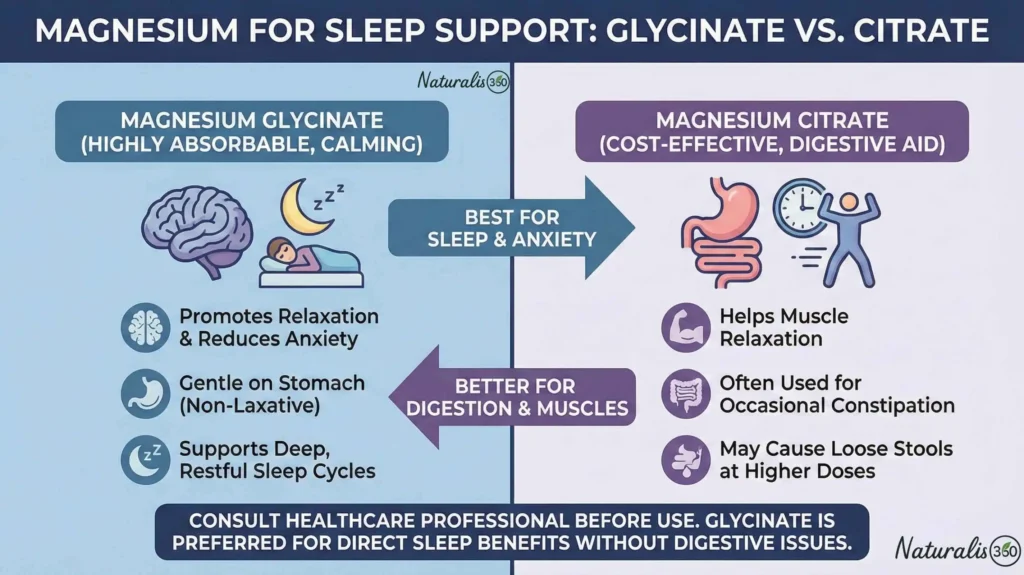
The key difference between magnesium glycinate vs citrate lies in what magnesium is bound to.
- Magnesium glycinate = magnesium + glycine (an amino acid)
- Magnesium citrate = magnesium + citric acid
That difference changes how your body absorbs and reacts to it.
Magnesium Glycinate for Sleep
Magnesium glycinate is often considered the superior choice in the magnesium glycinate vs citrate debate when sleep is the primary goal.
Why?
Because glycine itself supports relaxation.
Glycine has been studied for:
- Supporting calm nervous system activity
- Promoting faster sleep onset
- Improving subjective sleep quality
- Slightly lowering core body temperature (important for sleep initiation)
Magnesium glycinate is also:
- Highly bioavailable
- Gentle on digestion
- Less likely to cause loose stools
For people with stress-driven insomnia, nighttime anxiety, or muscle tension, glycinate is usually the better fit.
If you’re looking for a well-absorbed magnesium glycinate formula, choose one with clearly labeled elemental magnesium and minimal fillers. High-quality versions are widely available on Amazon.
Magnesium Citrate for Sleep
Magnesium citrate is highly absorbable — but it behaves differently.
Citrate is commonly used for:
- Digestive support
- Constipation relief
- General magnesium supplementation
In the magnesium glycinate vs citrate comparison, citrate:
- Absorbs well
- Is affordable
- Is widely available
But it can have a laxative effect at moderate doses.
For some people, improving digestion indirectly improves sleep. However, if your primary goal is nervous system relaxation, citrate may not be as targeted as glycinate.
If you haven’t yet, start with our complete guide: Best Magnesium for Sleep: Which Type Really Works?
Absorption: Magnesium Glycinate vs Citrate
In terms of absorption, both glycinate and citrate perform significantly better than magnesium oxide.
However:
- Glycinate is typically better tolerated long-term
- Citrate may cause GI stimulation at higher doses
If you’re supplementing specifically for sleep optimization, tolerance matters.
Digestive discomfort at night defeats the purpose.
Nervous System Effects: Which One Calms More?
When evaluating magnesium glycinate vs citrate for sleep, nervous system effects are central.
Magnesium glycinate:
- Supports parasympathetic activation
- Often preferred for stress-driven sleep issues
- May reduce nighttime overthinking
Magnesium citrate:
- Provides systemic magnesium
- Less directly calming
- May not significantly impact mental hyperactivity
If racing thoughts are your issue, you may also consider pairing magnesium with L-Theanine for Sleep and Relaxation.
Which One Is Better for Muscle Relaxation?
Both forms help with muscle relaxation — magnesium itself is responsible for that effect.
However, magnesium glycinate tends to:
- Provide smoother relaxation
- Cause fewer digestive disruptions
- Be better suited for nightly use
Magnesium and Energy Production
Sleep and energy are deeply connected.
Magnesium is required for ATP production inside mitochondria. If you’ve read our article on Mitochondrial Dysfunction Symptoms and How to Fix Your Energy, you know that poor cellular energy often overlaps with poor sleep.
In the magnesium glycinate vs citrate comparison, both support mitochondrial function — but glycinate is often preferred for long-term consistency.
Diet First: Don’t Forget the Basics
Before choosing between magnesium glycinate vs citrate, review your diet.
The updated US Diet Guidelines 2025 emphasize whole, nutrient-dense foods — which naturally contain magnesium. You can check our full article abou this topic (US Diet Guidelines: What Changed and Why It Matters).
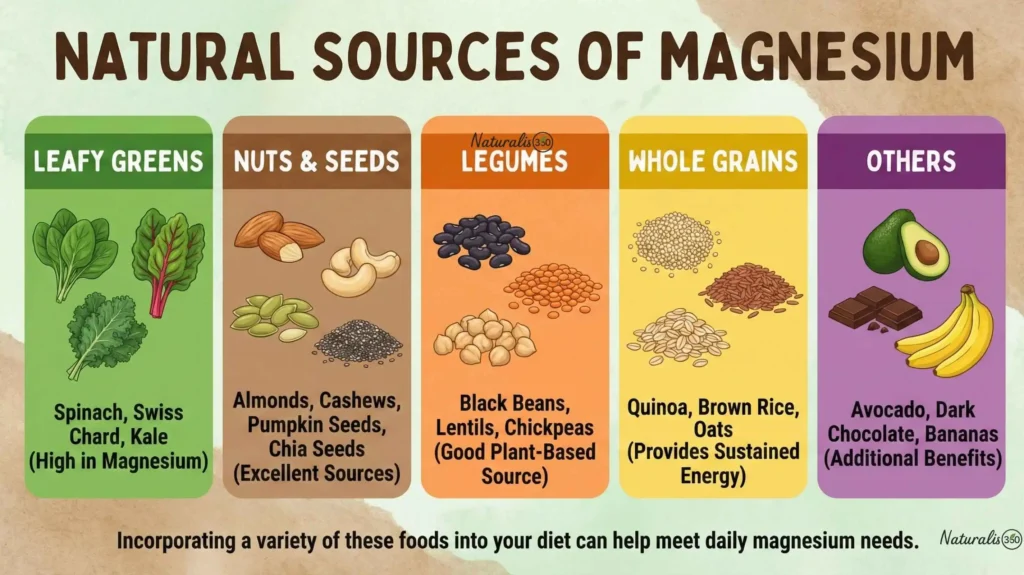
Magnesium-rich foods include:
- Pumpkin seeds
- Spinach
- Almonds
- Avocado
- Dark chocolate
However, modern soil depletion and food processing reduce average intake, which is why supplementation is often considered.
Dosage for Sleep
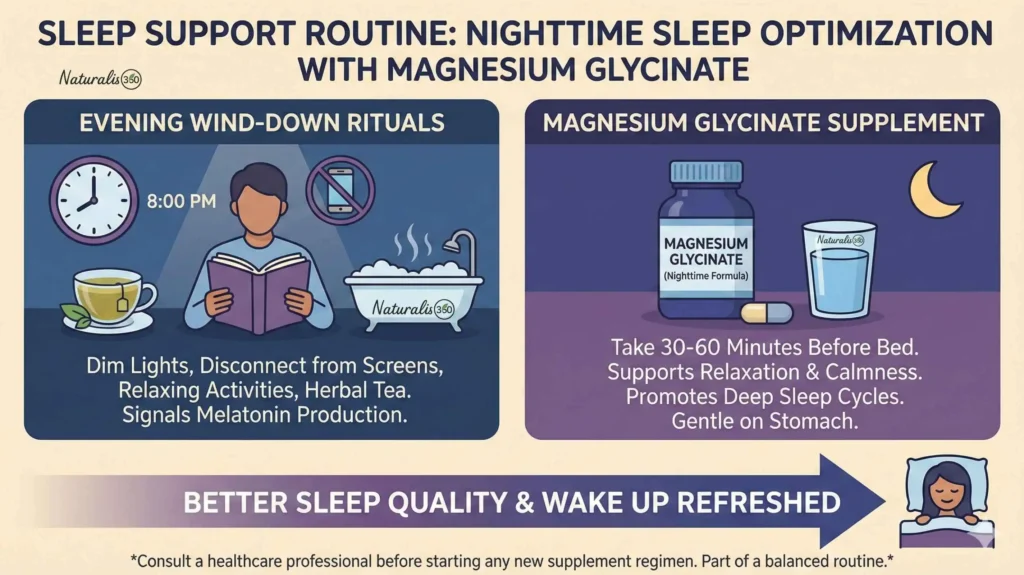
Typical sleep-support doses:
200–400 mg elemental magnesium per day
Best timing:
30–60 minutes before bed
Start lower (around 200 mg) and increase gradually if needed.
If digestive sensitivity is present, glycinate is typically safer.
When Magnesium Alone Isn’t Enough
Magnesium is powerful — but it’s not a standalone cure.
If you’re struggling with circadian misalignment, late-night screen exposure, or chronic stress, supplementation alone won’t fix it.
For a structured plan, review:
Sleep Optimization 101 – The Science of Deep, Restorative Sleep
For additional natural calming support:
L-Theanine for Sleep and Relaxation (inserir interlink após publicação)
If you’re building a more comprehensive sleep stack, some people explore natural blends designed to support circadian rhythm, relaxation, and recovery together. Products like Yu Sleep (inserir interlink após aprovação no click bank) combine ingredients aimed at supporting restorative sleep cycles without harsh sedatives. Always evaluate ingredient transparency before purchasing.
Soft CTA opportunity:
If you decide to try a structured natural sleep formula, choose one that complements magnesium rather than replaces foundational habits.
Evidence-Backed Benefits: Quantitative Data on Magnesium Glycinate vs Citrate for Sleep
When comparing magnesium glycinate vs citrate for sleep, real-world studies show clear differences in how they help. For instance, a 2025 trial found that magnesium glycinate reduced insomnia symptoms by about 28% in participants over four weeks, compared to 18% with a placebo, making it a strong choice for those needing calmer nights without stomach issues.
In contrast, magnesium citrate is often better for overall absorption but can lead to digestive side effects, which might disrupt sleep rather than improve it.
A 2024 pilot study highlighted that magnesium supplementation, especially glycinate forms, increased deep sleep time and overall sleep efficiency by noticeable amounts, along with better mood the next day.
For citrate, while it helps with general relaxation, one review noted it’s more effective for digestive relief than targeted sleep support, with some users reporting up to 10-15% better bowel regularity but no extra gains in sleep depth. These insights show glycinate often edges out for pure sleep benefits, aligning with natural relaxation without unwanted extras.
Final Verdict: Magnesium Glycinate vs Citrate
So, magnesium glycinate vs citrate — which wins?
If your goal is deep sleep, nervous system relaxation, and lower nighttime stress, magnesium glycinate is typically the better choice. It is widely preferred in sleep-focused protocols because of its calming profile and better gastrointestinal tolerance.
If your goal is digestive support, general magnesium replenishment, or occasional use, magnesium citrate can work — but it may not be ideal for nightly sleep support. Its stronger impact on the digestive system makes it better suited for specific situations rather than consistent bedtime use.
In most sleep-focused protocols, glycinate remains the preferred option, especially for those prioritizing relaxation, stress regulation, and deeper, more restorative sleep.
Scientific References
Here’s a selection of key studies referenced, with links to the sources:
- Schuster, J., et al. (2025). Magnesium Bisglycinate Supplementation in Healthy Adults Reporting Poor Sleep: A Randomized, Placebo-Controlled Trial. PMC. https://pmc.ncbi.nlm.nih.gov/articles/PMC12412596
- Breus, M. J., et al. (2024). Effectiveness of Magnesium Supplementation on Sleep Quality and Mood for Adults with Poor Sleep Quality: A Randomized Double-Blind Placebo-Controlled Crossover Pilot Trial. ESMED. https://esmed.org/MRA/mra/article/view/5410
- Rawji, A., et al. (2024). Magnesium can improve sleep quality and reduce anxiety: A systematic review. ICNS. https://www.icns.es/en/news/magnesium_improve_sleep_reduce_anxiety
- Abbasi, B., et al. (2012). The effect of magnesium supplementation on primary insomnia in elderly: A double-blind placebo-controlled clinical trial. PMC. https://pmc.ncbi.nlm.nih.gov/articles/PMC3703169