
Updated on February 11, 2026
A gut reset can be one of the fastest ways to feel lighter, clearer, and more energized — especially if your digestion has been “off” for weeks (or months). When your gut is inflamed or your microbiome is out of balance, the symptoms aren’t just digestive. Many of the most common complaints — fatigue, brain fog, cravings, bloating, irregularity — start in the gut.
This 7-day gut reset plan is designed to help you reset digestion naturally, reduce gut stress, and rebuild a healthier microbiome using real food, better habits, and targeted support. It’s not a harsh detox. It’s a clean, sustainable gut cleanse approach that works with your biology.
What a Gut Reset Is (and Isn’t)
A gut reset is a short, structured plan that reduces digestive burden while improving the environment inside your gut — especially the balance of beneficial bacteria.
Done correctly, a gut reset can help:
- reduce bloating and gas
- improve regularity
- stabilize appetite and cravings
- improve energy and mood
- support better sleep and recovery
What a gut reset is
A gut reset is a short-term reset of inputs:
- fewer inflammatory foods
- fewer processed additives
- fewer sugar spikes
- more gut-friendly fibers
- more microbiome-supporting foods
- more consistency
What a gut reset is not
This is important: a gut reset is not:
- starvation
- laxative-based “cleanses”
- extreme juice-only detoxes
- aggressive fasting (unless your body already tolerates it well)
- expensive supplement stacks
Those approaches can temporarily reduce symptoms, but often rebound hard — because they don’t rebuild the gut ecosystem.
If you want to understand the deeper signs of imbalance first, this pairs perfectly with:
🔗 Suggested reading: Signs of Poor Gut Health (and How to Fix Them Naturally)
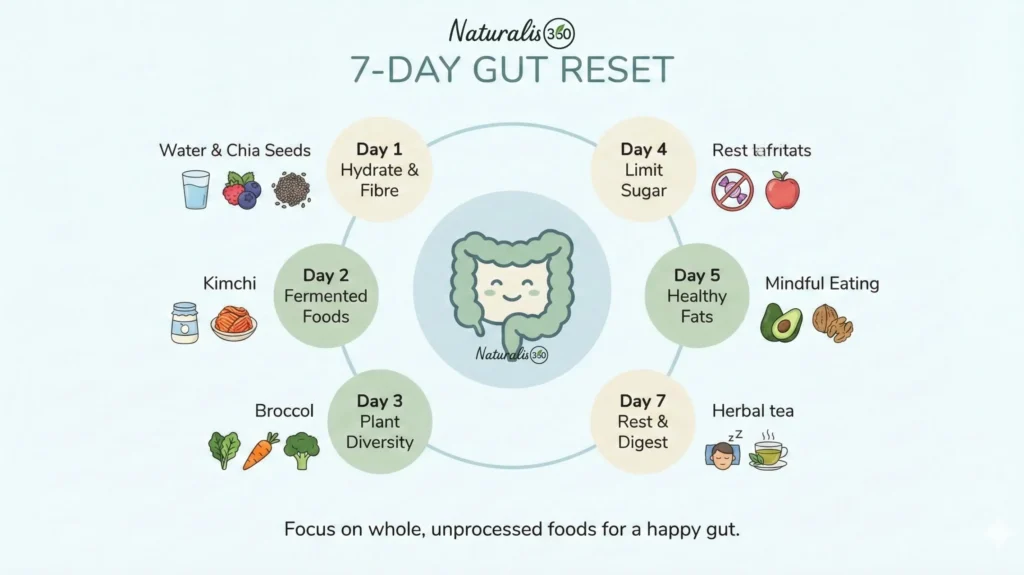
7-Day Step-by-Step Plan
This gut reset plan works best when you keep it simple. You’re not trying to “fix everything” in 7 days. You’re creating momentum — and giving your gut a clean environment to start healing.
Day 1 — Remove the Biggest Gut Disruptors
Your gut reset begins with subtraction.
For the next 7 days, remove (or sharply reduce):
- ultra-processed foods
- refined sugar (especially liquid sugar)
- fried foods and seed-oil-heavy meals
- alcohol
- artificial sweeteners
- packaged snacks
This is where many people notice the first improvement: less bloating and fewer crashes.
Day 2 — Hydration + Mineral Reset
A surprising amount of digestive dysfunction comes from dehydration.
On Day 2, focus on:
- 2–3 liters of water
- adding electrolytes (or a pinch of mineral salt)
- herbal teas like ginger or peppermint
A well-hydrated gut moves better, absorbs better, and inflames less.
Day 3 — Add Prebiotic Foods (Slowly)
Prebiotics feed beneficial gut bacteria — but too much too fast can cause gas.
Start with small amounts of:
- oats
- bananas (slightly green)
- onions/garlic (if tolerated)
- asparagus
- beans/lentils (tiny servings at first)
This is how you rebuild a gut cleanse into a true gut reset.
Day 4 — Add Fermented Foods (or Probiotics)
This is where your gut reset becomes microbiome-focused.
Add 1–2 servings per day of:
- yogurt with live cultures
- kefir
- sauerkraut
- kimchi
- miso
If fermented foods don’t work for you, this is also the ideal time to add a probiotic.
🔗 Suggested reading: Best Probiotics for Gut Health (2026 Review)

Day 5 — Focus on Gut Barrier Support
Many people doing a gut reset aren’t just dealing with “bloating.” They’re dealing with a weakened gut barrier.
On Day 5, prioritize:
- collagen-rich foods (bone broth, gelatin)
- zinc-rich foods (meat, pumpkin seeds)
- omega-3 sources (wild salmon, sardines)
- anti-inflammatory foods (olive oil, turmeric, berries)
This is where gut healing shifts from symptom relief to deeper repair.
If you suspect permeability issues, this article pairs perfectly:
🔗 Suggested reading: Leaky Gut Symptoms: What They Mean and How to Heal Naturally
Day 6 — Stabilize Blood Sugar (Energy Day)
A gut reset works better when blood sugar stops swinging.
This day is about:
- protein at every meal
- healthy fats for satiety
- fiber-rich plants
- no refined carbs
This is where people often report:
- better focus
- fewer cravings
- more stable energy
Day 7 — Build Your “Next 30 Days” Routine
The final day of your gut reset is about sustainability.
Choose your “non-negotiables” going forward:
- a probiotic or synbiotic
- 1 fermented food daily
- 25–35g fiber per day
- consistent sleep schedule
- 10–20 min daily movement
The real win isn’t 7 perfect days — it’s creating a gut-friendly baseline you can maintain.
Best Foods and Supplements for a Clean Start
A gut reset is built on food first. But supplements can help fill the gaps — especially if your gut has been struggling for a long time.
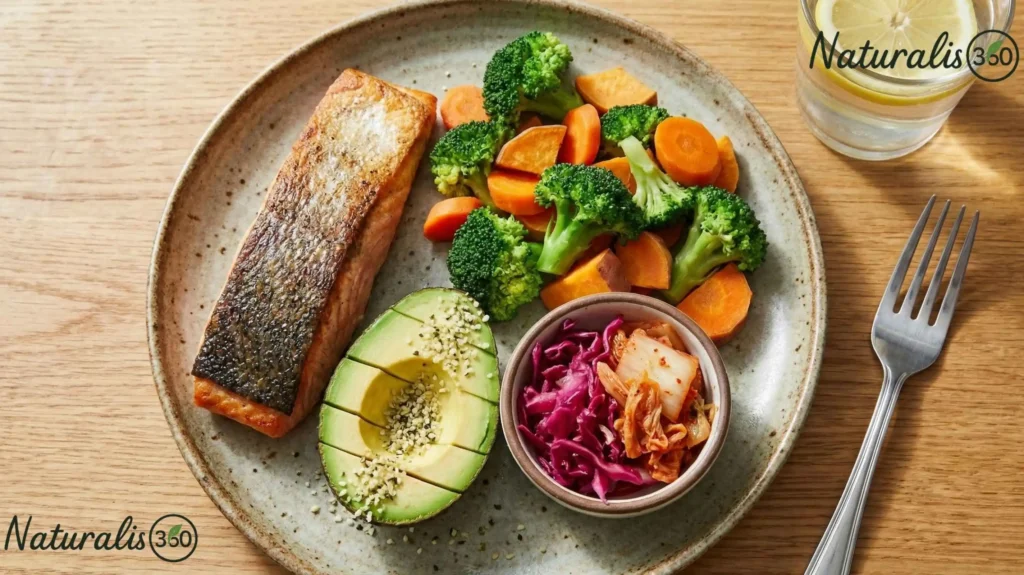
Best Foods for a Gut Reset
During your gut cleanse week, prioritize:
Proteins
- eggs
- wild fish
- poultry
- grass-fed beef (if tolerated)
Healthy fats
- olive oil
- avocado
- coconut oil (moderate)
- nuts/seeds
Gut-friendly carbs
- sweet potato
- oats
- berries
- cooked vegetables
Microbiome boosters
- fermented foods
- prebiotic foods
- polyphenol-rich plants
🔗 Suggested reading: Gut Healing Foods: Top 10 Foods for a Healthier Microbiome
Supplements That Can Support Your Reset (Without Overdoing It)
Here’s the key: a gut reset doesn’t need 12 supplements.
But these categories can help:
1) Probiotics (Daily Microbiome Support)
A quality probiotic helps restore beneficial strains — especially if stress, antibiotics, or diet have disrupted your gut.
If you want options, we reviewed the top sellers here:
🔗 Suggested reading: Best Probiotics for Gut Health (2026 Review)
2) Prebiotics (Fuel for Good Bacteria)
Prebiotics help probiotics thrive long-term.
If your gut is sensitive, start low and build slowly.
3) Digestive Enzymes (For Meal Relief)
Enzymes are helpful if your symptoms are:
- bloating after meals
- heavy digestion
- food sitting “too long”
They don’t replace probiotics — but they reduce digestive stress.
4) All-in-One Microbiome Blends (Simplest Option)
Some people prefer building gut support step-by-step.
Others want a streamlined approach — especially during a gut reset, when simplicity matters most.
If consistency has been your biggest struggle and you want an easier daily routine, PrimeBiome is often chosen because it combines multiple microbiome-supporting elements into one consistent formula — which can improve compliance and results over time.
According to EatingWell, a 7-day meal plan focused on gut health can effectively incorporate probiotic-rich foods like yogurt, kefir, and kimchi alongside prebiotic sources such as high-fiber fruits, vegetables, and whole grains to promote healthy gut bacteria growth and maintenance.
Finally, a research published in PMC NCBI highlights how dietary interventions designed to restore the gut microbiome can significantly improve digestion, cognition, and emotional wellbjmeing by manipulating gut bacteria through probiotics, prebiotics, and reduced inflammatory foods.
Final Thoughts
A gut reset is less about doing something extreme — and more about giving your digestive system a clear, supportive environment to recalibrate. In just seven days, small changes in food quality, rhythm, and microbiome support can noticeably reduce digestive stress and restore energy.
Use this plan as a reset button, not a finish line. When you carry even a few of these habits forward, your gut doesn’t just feel better — it starts working the way it was meant to again.