
Updated on February 28, 2026
If you are searching for natural sleep aids, chances are you are not looking for sedation — you are looking for restoration.
Modern insomnia is rarely about “not being tired.” It is about biological misalignment. Artificial light, chronic stress, irregular routines, and nutrient depletion have quietly disrupted the systems that once made sleep automatic. The result is a generation that feels exhausted yet wired, sleepy yet restless.
Prescription medications can force unconsciousness, but they rarely rebuild deep sleep architecture. Many suppress REM cycles, alter slow-wave sleep, or create dependency. That is not optimization — that is temporary override.
Natural sleep aids, when properly understood, do something different. They support the body’s intrinsic sleep systems: circadian rhythm regulation, nervous system balance, and hormonal signaling. Instead of overpowering biology, they reinforce it.
In this pillar guide, we will explore what truly works, what does not, and how to build a science-backed nighttime protocol that restores deep, restorative sleep naturally.
Why Insomnia Happens (and What Science Says)
Before choosing among natural sleep aids, we need to understand the mechanisms of insomnia itself.
Sleep is governed by two major biological forces: circadian rhythm and sleep pressure. Circadian rhythm is the internal 24-hour clock driven primarily by light exposure. Sleep pressure builds throughout the day as adenosine accumulates in the brain. When both systems are aligned, sleep unfolds naturally.
Insomnia occurs when this alignment breaks down.
Late-night screen exposure suppresses melatonin. Chronic stress elevates nighttime cortisol. Irregular sleep schedules desynchronize the body clock. Poor nutrition impairs neurotransmitter production. The nervous system remains in a sympathetic state when it should be shifting into parasympathetic dominance.
As explained in Sleep Optimization 101 – The Science of Deep, Restorative Sleep, deep sleep depends on hormonal precision and nervous system calm. Without those, no supplement will fully compensate.
Natural sleep aids are most effective when they target the underlying driver of insomnia — not merely the symptom.
For some, the problem is circadian misalignment.
For others, it is nervous system hyperarousal.
For many, it is both.
Best Natural Remedies for Sleep
Among the wide universe of natural sleep aids, a few stand out for consistent scientific backing. The goal is not to collect supplements — it is to choose intelligently based on physiology.
Let us examine the most reliable options.
Magnesium Glycinate
Magnesium is one of the most foundational natural sleep aids because it acts upstream in the nervous system.
Magnesium regulates over 300 enzymatic processes. In the context of sleep, it plays a crucial role in activating GABA receptors, calming neuromuscular tension, and moderating cortisol output. Deficiency can manifest as restless sleep, muscle tightness, nighttime anxiety, or difficulty staying asleep.
However, form matters significantly.
Magnesium glycinate (or bisglycinate) binds magnesium to glycine, an amino acid that itself has calming properties. This form is well-absorbed, gentle on digestion, and more suitable for sleep support than magnesium oxide or citrate.
Clinical research has shown magnesium supplementation can:
- Improve sleep efficiency
- Reduce time to fall asleep
- Increase total sleep time
- Support heart rate variability
If you want a deeper dive into choosing the best form, read:
📎 Best Magnesium for Sleep: Which Type Really Works?
If you are comparing absorption and digestive impact:
📎 Magnesium Glycinate vs Citrate for Sleep: Which One Is Better?
When selecting magnesium as part of your natural sleep aids protocol, prioritize high-absorption forms without artificial fillers. A simple, clean magnesium glycinate product is often sufficient.
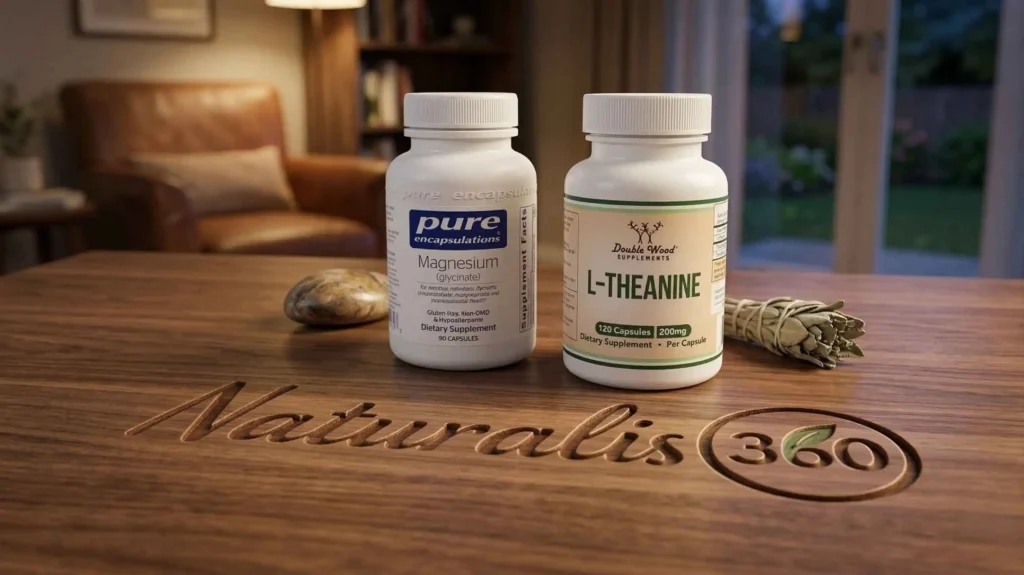
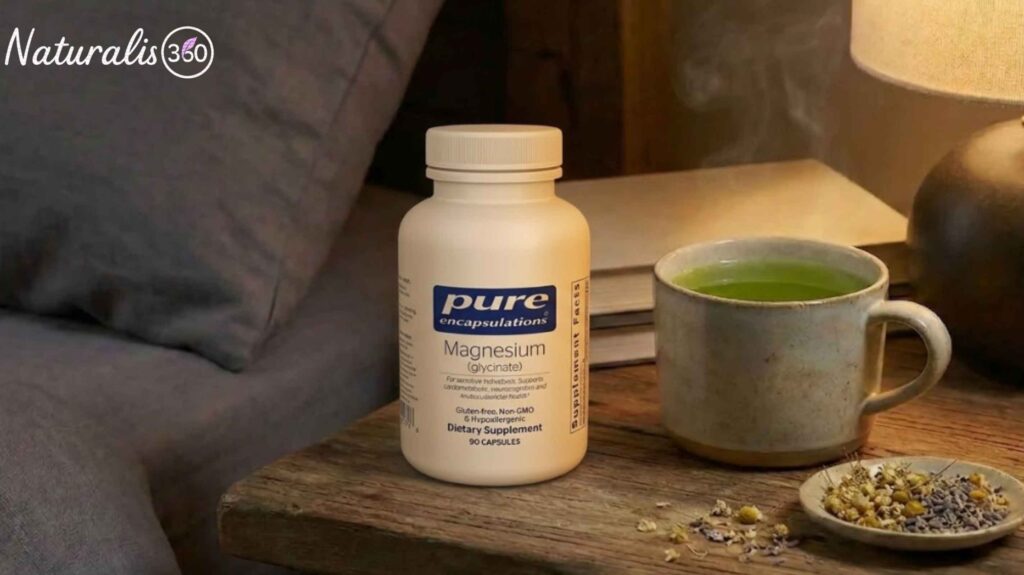
At Naturalis360, we recommend this Pure Encapsulations Magnesium Glycinate as a top choice—it’s a best-seller on Amazon for its high absorption, purity, and proven support for deeper sleep without digestive issues. Check it out here.
Melatonin (Timing and Dosage Matter)
Melatonin is one of the most popular natural sleep aids — and one of the most misunderstood.
Melatonin is not a sedative. It is a circadian signal. It informs the brain that darkness has arrived and initiates the cascade toward sleep.
It is most helpful when insomnia stems from:
- Delayed sleep phase
- Jet lag
- Shift work
- Irregular sleep timing
Low doses (0.5–3 mg) are typically sufficient. High doses do not necessarily improve outcomes and may cause grogginess or vivid dreams.
Melatonin works best when paired with behavioral changes: morning sunlight exposure, consistent sleep timing, and reduced evening blue light. Without those foundations, its effectiveness diminishes.
Based on our analysis at Naturalis360, this Natrol Melatonin Gummy (10mg, 140 count) is a reliable option—it’s a best-seller on Amazon for its convenient form, low-sugar gummies, and effective support for circadian reset without high-dose side effects. Check it out here.
Natural sleep aids should not replace circadian discipline — they should reinforce it.
L-Theanine (Calm Without Sedation)
For individuals whose insomnia is driven by racing thoughts or nighttime anxiety, L-theanine stands out among natural sleep aids.
Derived from green tea, L-theanine increases alpha brain waves associated with relaxed alertness. It does not induce sedation; rather, it smooths mental overactivity. Many users describe it as “quieting the mind without feeling drugged.”
Research suggests L-theanine may:
- Reduce perceived stress
- Improve sleep quality
- Shorten sleep onset
- Enhance relaxation
You can explore this in depth here:
👉 L-Theanine for Sleep and Relaxation (hiperlinkar após publicar)
L-theanine pairs particularly well with magnesium in stress-driven insomnia.
From our experience at Naturalis360, this Double Wood L-Theanine (200mg) is an excellent pick—it’s a best-seller on Amazon for its pure formula, no fillers, and reliable help in quieting the mind for better sleep without drowsiness. Check it out here.
How to Combine Them Safely
Natural sleep aids are not about stacking randomly. They are about intelligent layering.
A typical structured protocol might include magnesium glycinate in the evening, L-theanine 30–60 minutes before bed, and low-dose melatonin only if circadian delay is present. Introducing one variable at a time allows you to identify what truly moves the needle.
It is also important to avoid combining multiple sedating agents or using high-dose melatonin long-term without professional guidance.
The objective is not unconsciousness. It is restoration of sleep architecture.
The Role of Nutrition in Sleep Quality
One aspect often overlooked when discussing natural sleep aids is diet quality.
Blood sugar instability, late-night refined carbohydrate intake, and micronutrient deficiencies all impair sleep regulation. The 2025 US Dietary Guidelines update emphasizes nutrient density and reduction of ultra-processed foods — principles that indirectly support sleep stability.
You can explore that broader nutritional context here:
👉 US Diet Guidelines 2025: What Changed (and Why It Matters for Your Health)
Sleep and metabolism are deeply interconnected. Stable blood sugar overnight reduces cortisol spikes and midnight awakenings.
Natural sleep aids function best in a metabolically stable environment.
When a Comprehensive Sleep Formula Makes Sense
For some individuals, combining single supplements becomes cumbersome. In these cases, a carefully designed sleep formula may simplify implementation.
Multi-ingredient blends often combine:
- Magnesium
- Adaptogens
- Amino acids
- Low-dose melatonin
- Circadian-support natural compounds
Blends like Yu Sleep focus on evidence-informed components, such as magnesium, adaptogens, and calming amino acids, to help reinforce natural sleep cycles and reduce nighttime stress. This approach can be particularly helpful if you’re looking for a streamlined way to address insomnia roots, prioritizing stabilization over sedation.
If you are seeking a more structured formulation designed to support deep sleep cycles while reinforcing circadian rhythm and nervous system balance, exploring evidence-informed blends like Yu Sleep may be worthwhile. Check it out here.
Remember: natural sleep aids should feel stabilizing, not overpowering.
Evidence-Backed Benefits: Quantitative Data on Natural Sleep Aids
When evaluating natural sleep aids like magnesium, melatonin, and L-theanine, studies provide clear insights into their effectiveness for improving sleep quality and reducing insomnia symptoms.
For magnesium, a 2021 meta-analysis found that supplementation improved sleep quality in adults, with notable reductions in time to fall asleep (by about 17 minutes on average) and increases in total sleep time (up to 16 minutes more per night) across multiple trials.
This makes it especially helpful for those with muscle tension or stress affecting rest.L-theanine also shows promise: A 2025 systematic review and meta-analysis revealed it improved sleep onset latency by a small but significant amount (standardized mean difference of 0.15), reduced daytime dysfunction (by 0.33), and boosted overall sleep quality scores (by 0.43) in healthy adults.
Users often report fewer nighttime awakenings and better focus the next day, without the grogginess of traditional sleep aids.For melatonin, research from a 2024 review indicated that low doses (0.5-3 mg) helped with sleep onset in people with jet lag or shift work, shortening the time to fall asleep by 7-9 minutes and improving sleep efficiency by 2-3% compared to placebo.
These aids work best when combined with habits like dimming lights, as they support your body’s natural rhythms rather than forcing sleep.
Final Thoughts – Building a Gentle Night Routine
The most effective natural sleep aids are not pills. They are biological signals.
Magnesium calms excitability.
L-theanine softens mental noise.
Melatonin realigns timing.
But sleep is fundamentally a rhythm.
When circadian exposure is consistent, when stress is managed, when nutrient status is optimized, the body reclaims its capacity for deep, restorative sleep.
Natural sleep aids work best when they are part of a complete system: morning light, consistent timing, balanced nutrition, and nervous system regulation.
Sedation is easy.
Restoration is strategic.
And restoration is what creates lasting sleep.
Scientific References
Here’s a selection of key studies referenced, with links to the sources:
- Arab, A., et al. (2021). The Role of Magnesium in Sleep Health: A Systematic Review of Available Literature. PMC. https://pmc.ncbi.nlm.nih.gov/articles/PMC8053283
- Bulman, A., et al. (2025). The effects of L-theanine consumption on sleep outcomes: A systematic review and meta-analysis. ScienceDirect. https://www.sciencedirect.com/science/article/pii/S1087079225000292
- Costello, R. B., et al. (2024). The effectiveness of melatonin for promoting healthy sleep: A rapid evidence assessment of the literature. PMC. https://pmc.ncbi.nlm.nih.gov/articles/PMC4273450
- Esquivel, M. K. (2024). Current Evidence on Common Dietary Supplements for Sleep Quality. PMC. https://pmc.ncbi.nlm.nih.gov/articles/PMC11082867