
Updated on February 11, 2026
Gut healing foods are one of the most underrated tools for improving digestion, reducing bloating, strengthening immunity, and rebuilding a healthier microbiome — without extreme detoxes, aggressive restrictions, or trendy “cleanse” programs.
The truth is simple: your gut bacteria respond to what you eat every day. Some foods help beneficial microbes grow, produce anti-inflammatory compounds, and strengthen your intestinal lining. Other foods (especially ultra-processed ones) can slowly push your gut toward imbalance — often without obvious symptoms at first.
In this guide, you’ll learn exactly how gut healing foods work, which foods have the strongest science-backed gut benefits, and how to turn them into simple meals and smoothies you can actually stick to.
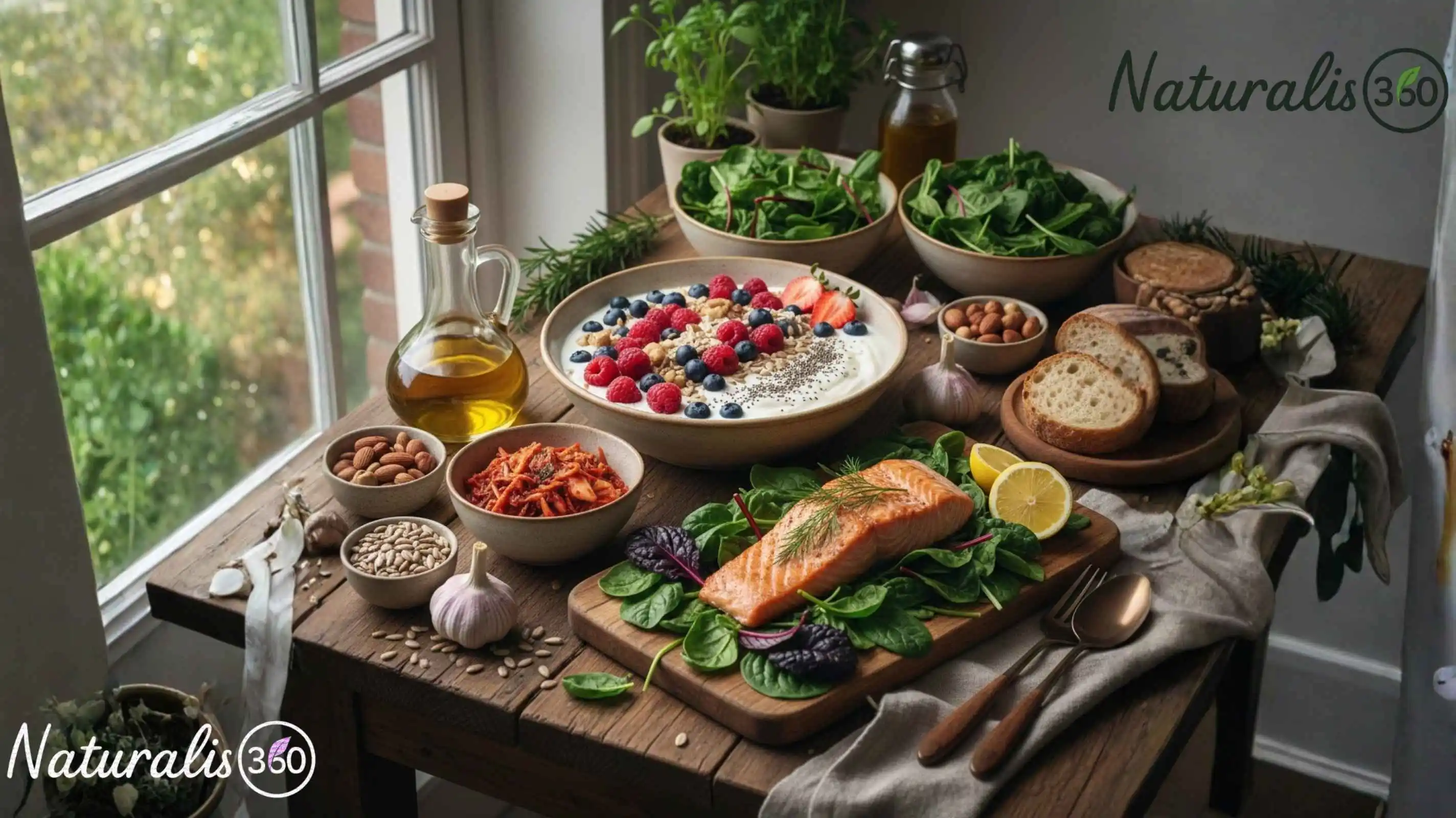
How Food Shapes Gut Bacteria
Your gut microbiome is a living ecosystem of bacteria, fungi, and microbes that influence digestion, nutrient absorption, inflammation levels, mood, cravings, metabolism, and immune resilience.
And here’s the key point: your gut bacteria are not fixed. They change quickly depending on:
- your daily fiber intake
- how many ultra-processed foods you eat
- your stress and sleep quality
- whether you include fermented foods
- the diversity of plants in your diet
The “fuel” that good gut bacteria need
Many beneficial bacteria thrive on prebiotic fibers — compounds found in foods like oats, onions, garlic, bananas, legumes, and asparagus. When bacteria ferment these fibers, they produce short-chain fatty acids (SCFAs) like butyrate, acetate, and propionate.
These compounds help:
- support the intestinal barrier
- reduce gut inflammation
- stabilize blood sugar
- support bowel regularity
- improve immune signaling
In other words: gut healing foods don’t just “help digestion.”
They help your gut rebuild from the inside out.
🔗 Suggested reading: Gut Health 101 – How to Improve Digestion and Restore Balance
🔗 Suggested reading: Leaky Gut Symptoms: What They Mean and How to Heal Naturally
For more on fiber and gut health basics, Harvard’s nutrition research is a solid reference.
The Top 10 Gut-Healing Foods
Below are 10 gut healing foods that consistently show up in nutrition research, traditional diets, and modern microbiome science. The goal isn’t perfection — it’s consistency.
1) Yogurt (with live cultures)
Plain, unsweetened yogurt is one of the easiest gut healing foods to start with. It delivers beneficial bacteria and supports digestion, especially when paired with fiber.
Best for: regularity, mild bloating, microbiome maintenance
Tip: Choose “live and active cultures” and avoid sugary versions.
2) Kefir
Kefir is like yogurt’s stronger cousin — a fermented drink with a wider range of microbes. Many people find kefir easier to digest than milk.
Best for: rebuilding microbiome diversity
Tip: Start slow if you’re sensitive, because kefir is potent.
3) Sauerkraut or Kimchi
Fermented vegetables are powerful because they combine probiotics with plant compounds and acids that support digestion.
Best for: microbiome diversity, digestion, immune support
Tip: Look for refrigerated versions (shelf-stable jars are often pasteurized).
4) Oats
Oats are one of the most reliable prebiotic foods. They feed beneficial bacteria and support steady digestion.
Best for: constipation, gut lining support, stable energy
Bonus: Oats contain beta-glucans, which support immune function too.
5) Garlic + Onions
Garlic and onions contain prebiotic fibers that feed beneficial bacteria — and they’re some of the strongest natural microbiome builders.
Best for: long-term gut balance
Tip: Cooked versions are often easier for sensitive stomachs.
6) Berries (blueberries, raspberries, strawberries)
Berries are rich in polyphenols — plant compounds that support beneficial gut microbes and reduce inflammation.
Best for: inflammation, gut-brain axis, metabolic health
Tip: Frozen berries work perfectly and are cheaper.
7) Olive Oil (extra virgin)
Extra virgin olive oil supports the gut lining and helps reduce inflammatory signaling. It also improves absorption of fat-soluble nutrients.
Best for: gut repair support, inflammation control
Tip: Use it as a daily staple — not just occasionally.
8) Bone Broth (real, slow-cooked)
Bone broth is a traditional gut-supportive food that provides amino acids like glycine and proline, which may support gut lining integrity.
Best for: gut barrier support, gentle digestion
Tip: Choose clean ingredients — many packaged broths are low-quality.
9) Wild Salmon (or sardines)
Omega-3 fats reduce inflammation and support immune balance — and gut health is deeply connected to inflammation.
Best for: systemic inflammation, gut-immune balance
Tip: Even canned sardines are a great budget option.
10) Lentils and Beans (if tolerated)
Legumes are some of the best fiber sources in the world — and fiber is one of the biggest predictors of microbiome health.
Best for: microbiome diversity, bowel regularity
Tip: Start small, soak well, and increase gradually to avoid gas.
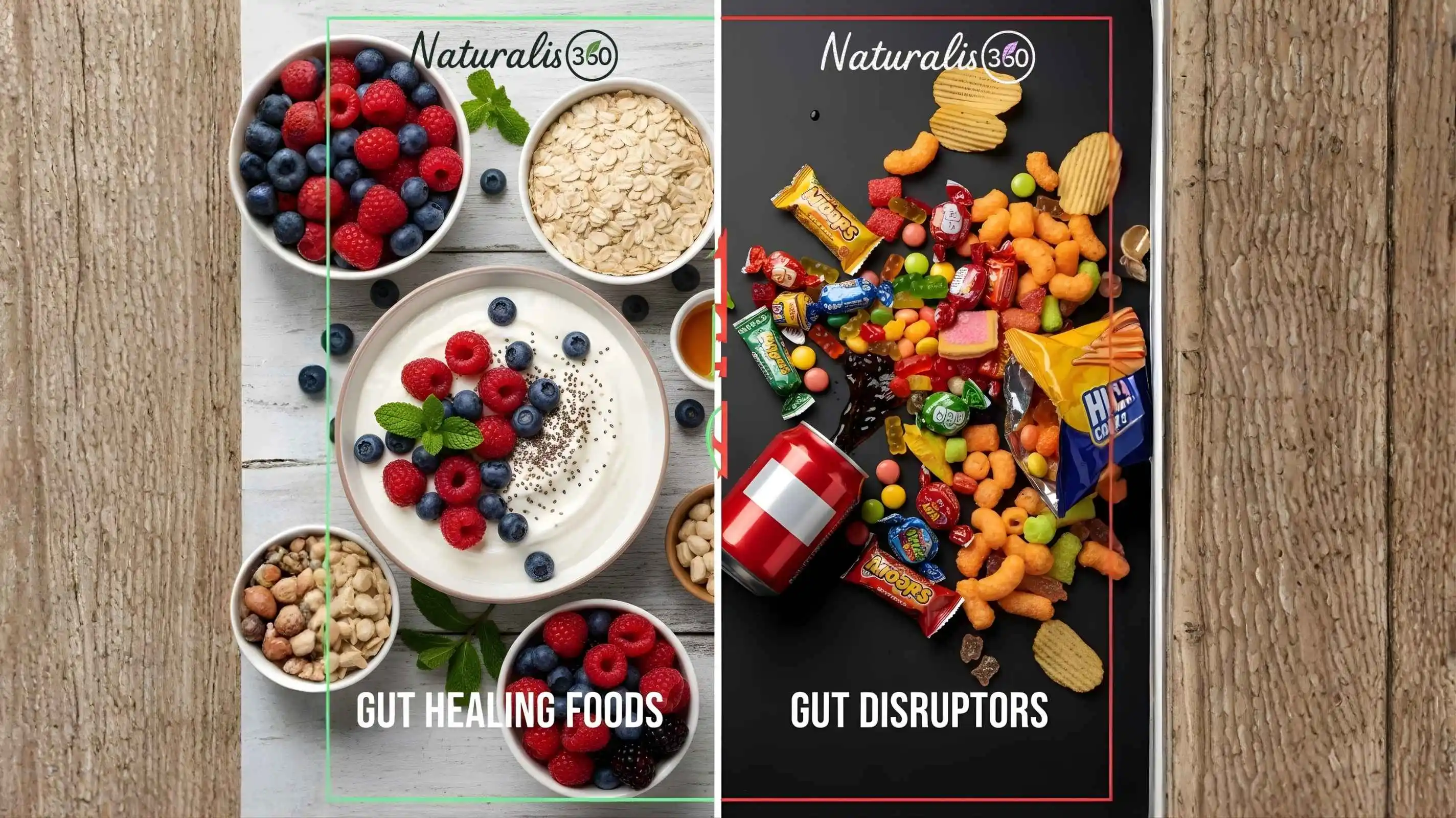
Meal Ideas and Smoothies
Knowing the top gut healing foods is one thing.
Actually eating them daily is the real challenge.
Here are simple meal ideas that combine probiotics + prebiotics + anti-inflammatory nutrients.
Gut-Healing Breakfast Ideas
Option 1: Yogurt bowl
- plain yogurt
- berries
- oats or granola (low sugar)
- chia seeds
- drizzle of honey (optional)
Option 2: Oatmeal upgrade
- oats
- cinnamon
- blueberries
- walnuts
- spoon of kefir added after cooking
Option 3: Eggs + gut-friendly sides
- eggs (protein helps satiety)
- avocado
- sautéed onions/garlic
- side of fermented veggies (small amount)
Gut-Friendly Lunch and Dinner Ideas
Option 1: Salmon + olive oil veggies
- salmon or sardines
- roasted vegetables
- olive oil dressing
- small serving of lentils (if tolerated)
Option 2: “Microbiome bowl”
- brown rice or quinoa
- lentils or chickpeas
- leafy greens
- olive oil + lemon
- side of kimchi
Option 3: Simple soup
- bone broth base
- onions + garlic
- carrots + celery
- shredded chicken
- add cooked lentils for fiber
Smoothies That Support Gut Health
Smoothies can be a powerful gut strategy — as long as they aren’t sugar bombs.
Gut Healing Smoothie #1 (daily option)
- kefir
- frozen blueberries
- chia seeds
- cinnamon
- handful of spinach
Gut Healing Smoothie #2 (gentle + soothing)
- bone broth (yes, in a savory smoothie) or warm broth on the side
- banana (slightly green if tolerated)
- collagen powder (optional)
- ginger
Gut Healing Smoothie #3 (fiber + microbiome builder)
- yogurt
- oats
- berries
- flaxseed
- small amount of honey
A quick warning about going “too hard” too fast
A lot of people increase fiber overnight and then panic because they get gas, bloating, or discomfort.
That doesn’t mean gut healing foods aren’t working — it often means you increased them too quickly.
Start small. Increase gradually. Your microbiome adapts.
🔗 Suggested reading: The Best Mitochondrial Supplements (2025) Reviewed: CoQ10, PQQ, ALA, L-Carnitine, and Mitolyn
🔗 Suggested reading: Early Signs of Mitochondrial Dysfunction You Shouldn’t Ignore
When Supplements Can Help (Without Replacing Real Food)
Food is the foundation — always.
But in real life, many people struggle with gut healing foods because of:
- busy schedules
- food sensitivities
- inconsistent fiber intake
- years of microbiome imbalance
- stress and sleep disruption
- limited access to fermented foods
That’s where supplements can be useful — not as a replacement, but as a support tool.
The “all-in-one” approach
Some people prefer building gut support step-by-step with individual supplements (probiotics + prebiotics + digestive enzymes). Others prefer simplified daily formulas that combine multiple gut-supporting elements.
If you’re someone who struggles to consistently combine gut healing foods every day, a comprehensive blend like PrimeBiome may be exactly what you’re looking for — especially if you want a streamlined routine that supports microbiome balance and digestive comfort without overcomplicating your diet.
Add these gut healing foods to your daily routine — or simplify your support with an all-in-one microbiome powerhouse like PrimeBiome.
Final Thoughts
Gut healing foods don’t work through hype — they work through biology. When you consistently feed your microbiome the right inputs, your gut becomes calmer, stronger, and far more resilient over time.
Start simple. Stay consistent. And let your gut do what it was designed to do: heal.