
Updated on February 10, 2026
The release of the Food Pyramid 2025 — part of the updated US dietary framework — marks one of the most pivotal nutritional shifts in years. After decades of controversy, confusion, and conflicting recommendations, the new model attempts to reflect modern science by encouraging real, nutrient-dense foods while firmly discouraging highly processed options.
For years, federal nutrition guidance leaned heavily on simplistic categorizations that blurred the difference between engineered foods and biologically meaningful nutrition. The 2025 version, however, is more ambitious: it acknowledges the importance of nutrient quality, metabolic balance, healthy fats, and dietary patterns that align with long-term metabolic and digestive health.
At Naturalis360, we view the Food Pyramid 2025 as a largely positive step toward real, science-aligned nutrition guidance — one that finally validates many natural health principles that mainstream health advocates have been calling for.
How the Food Pyramid 2025 Differs from Previous Models
Historically, the US food pyramid placed grains and carbohydrates at the base, with fats and oils in a cautionary tier, and protein sources varied in recommendations. The updated Food Pyramid 2025 shifts these priorities based on emerging evidence.
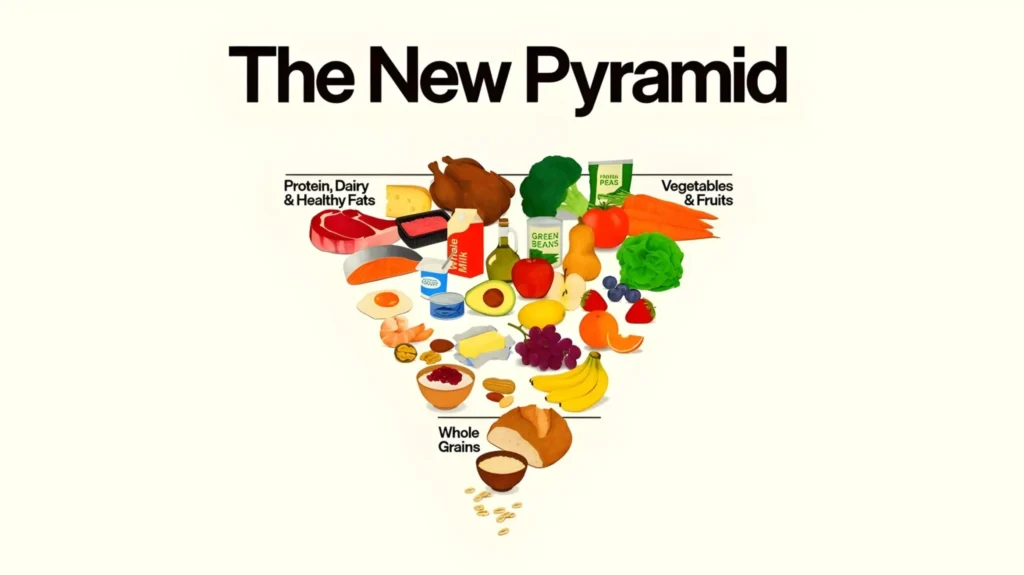
The 2025 US Food Pyramid, reintroduced by the USDA and HHS as part of the Dietary Guidelines for Americans 2025-2030, dramatically inverts the traditional structure to prioritize nutrient-dense, whole foods over refined carbohydrates.
This “flipped” pyramid features a broad top section dedicated to proteins, dairy, and healthy fats—illustrated with items like steak, whole milk, cheese, eggs, butter, avocados, and olive oil—combined with vibrant vegetables and fruits such as broccoli, carrots, apples, berries, and greens, emphasizing their role in metabolic resilience, satiety, and gut health. Narrowing down to the pointed base, whole grains like bread, oatmeal, and rice occupy a smaller portion, signaling a shift away from heavy reliance on grains and toward balanced, real-food patterns that support long-term wellness and reduce processed food intake.
While some critics argue the previous approach was “too vague,” the new pyramid emphasizes nutrient density and metabolic context over empty calorie counts.
Here are the most meaningful changes:
1. Whole Foods at the Base — Not Refined Carbohydrates
The new Food Pyramid 2025 places vegetables, fruits, legumes, nuts, seeds, and whole grains as foundational. Instead of emphasizing grains alone (a criticism of past models), the focus is on diverse, fiber-rich plants that support digestion, glycemic control, and microbial diversity.
This reflects evidence from gut microbiome research showing that microbial metabolism of dietary fibers produces short-chain fatty acids (SCFAs) — compounds essential for colon health and metabolic signaling.
2. Healthy Fats Finally Recognized for Their Role
For decades, fats were broadly labeled as something to “limit.” The 2025 guidance finally distinguishes between:
✔ healthy fats (olive oil, avocados, nuts, seeds, omega-3 sources)
✘ industrial seed oils and trans fats
This approach is more aligned with observational research showing that monounsaturated and certain saturated fats can contribute to satiety, nutrient absorption, and stable energy without promoting inflammation when consumed in whole food contexts.
3. Protein Positioned with Purpose
Protein sources — both animal and plant — are clearly articulated as vital for:
- muscle repair
- immune system support
- hormone balance
- metabolic resilience
Rather than place all protein sources into a single “neutral” category, the pyramid encourages quality sources while still emphasizing whole food contexts over processed alternatives like imitation meats or engineered protein bars.
Where the Food Pyramid 2025 Gets It Right
The new food pyramid aligns with emerging science and many natural health principles:
Emphasis on Eating Patterns, Not Isolated Nutrients
Modern nutrition science understands that health outcomes are driven by patterns of eating, not isolated numbers. Food Pyramid 2025 highlights combinations of foods that work synergistically, rather than focusing on single nutrients like “lower fat” or “lower carbs.”
Greater Clarity Around Processed Foods
The 2025 model clearly discourages highly processed foods — a welcome change. Ultra-processed foods often contain:
- added sugars
- artificial flavors
- refined oils
- high sodium
This category has been linked to inflammation, metabolic imbalance, and negative impacts on gut microbiome diversity.
By elevating whole food categories, the pyramid supports diets that inherently improve energy, digestive regularity, and long-term metabolic function.
Where the Food Pyramid 2025 Falls Short — And How to Think Beyond It
No guideline is perfect, and the Food Pyramid 2025 includes areas that could be further refined:
1. Still Doesn’t Fully Address Individual Metabolic Needs
Federal guidelines are broad and cannot tailor recommendations to individuals with unique metabolic conditions, insulin resistance, or digestive sensitivities. A 70-year-old with gut dysbiosis will benefit differently from these standards than a teenager athlete.
Personalization — based on activity, age, microbiome function, and lifestyle — is essential.
2. The Language Around Grains Still Too General
While whole grains are encouraged, the pyramid doesn’t fully differentiate between:
✔ genuinely whole, minimally processed grains
✘ refined versions labeled “whole” but stripped of fiber and phytonutrients
This nuance is critical for people with metabolic sensitivities or glucose regulatory challenges.
3. It Doesn’t Address Food Environments
Guidelines are only useful if people can access and afford real food. Structural issues like food deserts, socioeconomic barriers, and agricultural policy still influence what ends up on plates.
Scientific Context: Why the Pyramid Matters
Research continues to show:
- diets high in whole, fiber-rich plants support microbiome diversity
- balanced fat intake supports hormonal stability
- quality proteins support metabolic resilience
- ultra-processed foods drive systemic inflammation
According to the USDA and HHS press release outlining the dietary reset, the 2025 guidelines aim to bridge public health policy with contemporary science and metabolic health goals. This shift acknowledges decades of research linking poor diet patterns to obesity, diabetes, cardiovascular disease, and even impaired immune function.
🔗 Check here the HHS press release on historic federal nutrition policy
The Naturalis360 Perspective: Natural First, Always
At Naturalis360, we believe that:
- Nature provides nutrients in patterns that our biology recognizes
- Microbiome health should guide dietary recommendations
- Real food choices support energy, immunity, and longevity
The Food Pyramid 2025 goes a long way toward validating these principles — but it still simplifies complex biology for broad audiences.
Supporting your health requires:
✔ nutrient diversity
✔ anti-inflammatory eating
✔ gut microbiome support
✔ metabolic flexibility
✔ lifestyle harmony
These are not mere dietary trends — they are biological necessities.
For more on microbiome and nutrition synergies, see The Complete Guide to Gut Probiotics, Prebiotics & Postbiotics for Better Digestion
How to Apply Food Pyramid 2025 to Daily Life
Here are practical ways to use the new pyramid in your meals:
Shift the Foundation
Build meals starting with:
- Protein
- vegetables
- colorful fruits
- leafy greens
Instead of beginning with:
- refined grains
- sugary cereals
Choose Protein With Purpose
Include:
- Steak
- Eggs
- Legumes
- Fish
- Sustainably raised meats
Use Fats That Nourish
Add: olive oil, avocado, nuts and seeds.
Avoid: industrial seed oils and hydrogenated fats.
Reduce at all costs added sugars and ultra-processed foods. This aligns with broader public health goals and supports stable blood sugar and metabolic resilience.
🔗 Suggested reading: Best Probiotics for Gut Health (2026 Review)
Final Thoughts
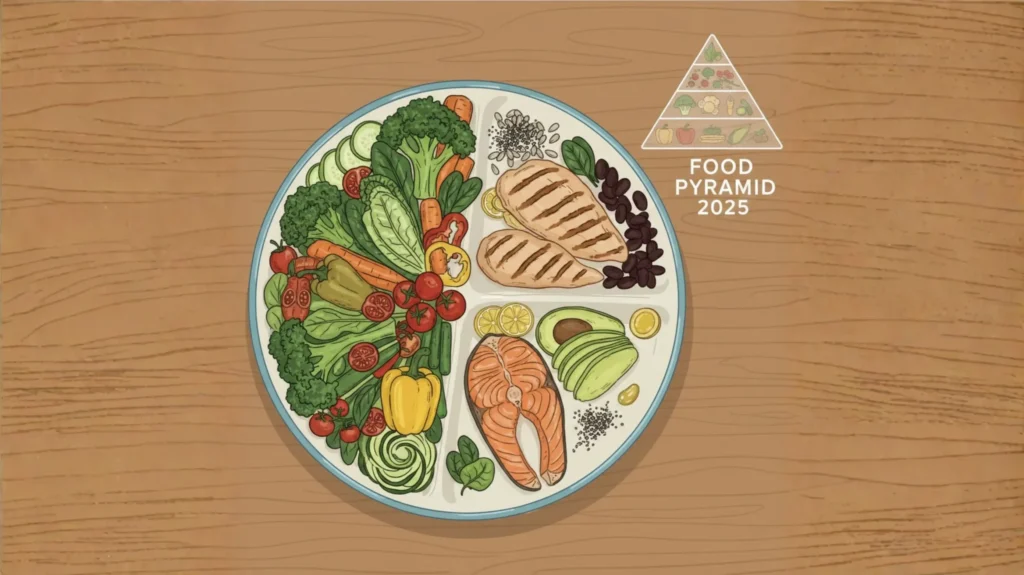
The Food Pyramid 2025 is a meaningful evolution in federal nutrition guidance. It brings real food and nutrient density to the forefront, acknowledges the role of healthy fats and quality proteins, and discourages empty calories and highly processed options.
While not perfect, it aligns more closely with biological reality and modern science than its predecessors — and it sets a foundation that individuals can refine with personalized choices.
At Naturalis360, we see this not just as policy, but as validation: choosing whole foods, supporting the microbiome, and prioritizing real nutrition are not trends — they are essential strategies for real, lifelong health.