
Updated on January 23, 2026
Poor gut health is far more common than most people realize — and it often shows up in ways that seem completely unrelated to digestion. While symptoms may start subtly, an imbalanced microbiome can quietly affect your mood, energy, immunity, skin, sleep, and overall resilience long before a diagnosis ever appears.
Recognizing the early signs of poor gut health is the fastest way to reverse the problem naturally and restore balance from the inside out.
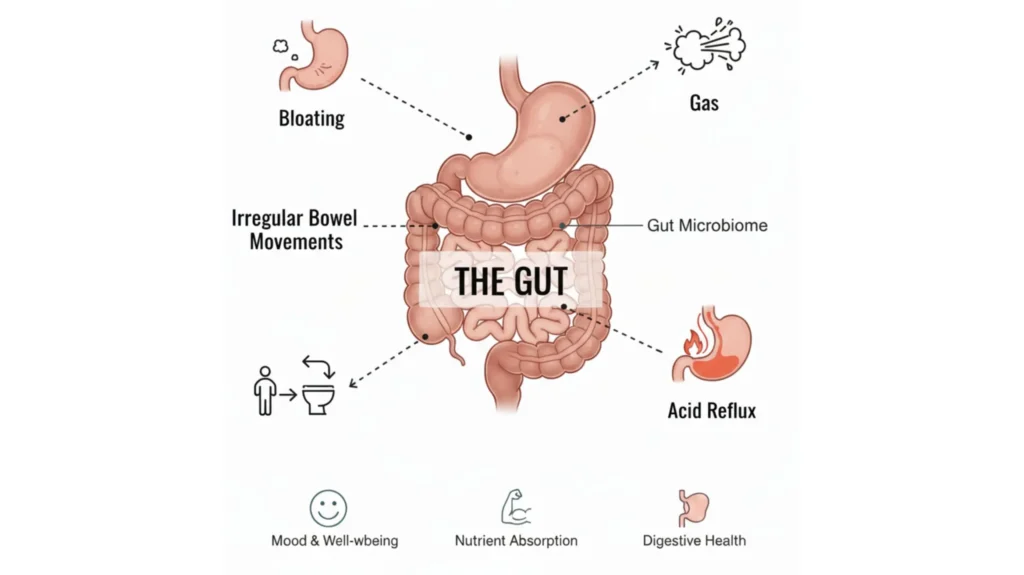
Digestive Signs You Shouldn’t Ignore
Your gut is a living ecosystem made up of trillions of bacteria, fungi, and microbes working together to digest food, absorb nutrients, and protect the intestinal lining. When this ecosystem falls out of balance — a state known as dysbiosis — digestion is usually the first system to sound the alarm.
Persistent bloating after meals
Occasional bloating can be normal, but frequent bloating after eating often signals poor fermentation control, low digestive enzyme activity, or an imbalance between beneficial and harmful bacteria. In cases of poor gut health, food may sit longer in the digestive tract, leading to excess gas production.
Irregular bowel movements
Healthy digestion usually means consistent, comfortable bowel movements. Constipation, loose stools, or unpredictable patterns are some of the clearest signs of poor gut health and may reflect inflammation, low fiber intake, or insufficient beneficial bacteria.
Excess gas and abdominal discomfort
When gas becomes frequent, painful, or foul-smelling, it often points to microbial imbalance. Harmful bacteria may dominate fermentation processes, disrupting how food is broken down and absorbed.
New or worsening food sensitivities
Suddenly reacting to foods like dairy, gluten, legumes, onions, or high-fiber vegetables can be a sign that the gut lining is inflamed or compromised. Poor gut health can reduce enzyme production and weaken the intestinal barrier, making digestion more difficult.
Acid reflux or frequent heartburn
While commonly blamed on stomach acid alone, reflux is often linked to slow digestion and gut imbalance. When food lingers too long in the stomach, pressure builds and pushes acid upward.
If several of these symptoms are showing up consistently, your digestive system is likely asking for support — not suppression.
🔗 Suggested reading: S06 – Gut Reset Plan: 7 Days to Better Digestion & Energy
Non-Digestive Symptoms of Poor Gut Health
One of the most overlooked aspects of poor gut health is how far its effects can reach beyond digestion. Through the gut–brain axis, immune signaling, and inflammatory pathways, an imbalanced microbiome can affect the entire body.
Mood changes, anxiety, or brain fog
Around 90% of serotonin is produced in the gut. When microbial balance is disrupted, neurotransmitter production can suffer — leading to anxiety, irritability, low motivation, and difficulty concentrating.
Chronic fatigue and low energy
Poor gut health often interferes with nutrient absorption, especially B-vitamins, iron, magnesium, and amino acids. Inflammation driven by dysbiosis also drains metabolic energy, leaving you tired even after rest.
Skin issues (acne, eczema, rosacea)
The gut–skin connection is well documented. When the intestinal barrier becomes permeable, immune reactions increase and often show up on the skin as redness, breakouts, or chronic irritation.
Frequent colds or weakened immunity
Nearly 70% of immune cells reside in the gut. When harmful microbes dominate, immune signaling becomes inefficient, making the body more vulnerable to infections.
Unexplained weight changes
Poor gut health can influence appetite regulation, cravings, and how calories are extracted from food. Some bacteria promote fat storage, while others affect hunger hormones — leading to weight gain or loss without clear explanation.
[Image: diagram connecting gut imbalance to mood, skin, immunity, and fatigue]
🔗 Suggested reading: S10 – The Gut–Brain Connection: How Your Microbiome Affects Mood & Focus
How to Restore Gut Balance Step by Step
Fixing poor gut health doesn’t require extreme detoxes or restrictive protocols. The most sustainable improvements come from consistent, targeted habits that restore microbial diversity and reduce inflammation.
1. Remove the main disruptors
Begin by minimizing factors that inflame the gut:
- ultra-processed foods and artificial sweeteners
- excess sugar and refined carbohydrates
- frequent alcohol consumption
- chronic stress and irregular sleep
Reducing these inputs creates space for healing.
2. Add gut-supportive foods daily
Focus on foods that nourish beneficial bacteria:
- fermented foods (yogurt, kefir, sauerkraut, kimchi)
- fiber-rich vegetables and fruits
- prebiotic foods like garlic, onions, oats, bananas, and legumes
- polyphenol-rich foods such as berries, olive oil, and green tea
Consistency matters more than perfection.
3. Support the microbiome strategically
While diet builds the foundation, many people benefit from targeted microbiome support — especially if poor gut health has been present for a long time. Clinically studied probiotics, prebiotics, and postbiotics can help rebalance bacterial populations, improve motility, and strengthen the intestinal lining.
Some people prefer building support step-by-step with individual supplements, while others opt for all-in-one formulas that combine multiple mechanisms in a single routine.
🔗 Suggested reading:
→ Probiotics, Prebiotics & Postbiotics: The Complete Guide to Gut Support
→ Probiotics vs Prebiotics: Why This Powerful Duo is Vital for Your Gut?
4. Manage stress intentionally
Chronic stress is one of the fastest ways to disrupt gut balance. Simple habits like daily walks, breathwork, stretching, or short mindfulness sessions can significantly improve digestive signaling.
5. Prioritize sleep quality
The gut follows circadian rhythms. Poor sleep interferes with microbial repair and increases inflammation. Aim for consistent sleep and reduced screen exposure at night.
6. Hydrate for digestion
Water supports bowel regularity and nutrient absorption. Herbal teas such as ginger, peppermint, or chamomile can further ease bloating and discomfort.
7. Reintroduce foods gradually
As gut balance improves, many food sensitivities fade. Reintroduce foods slowly and observe how your body responds.
With consistent habits, most people notice improvements in digestion, energy, skin clarity, and mood within a few weeks.
A few daily changes + targeted microbiome support can completely transform gut health.
When Food Alone Isn’t Enough
In an ideal world, everyone would consistently combine fermented foods, diverse fibers, stress management, quality sleep, and perfect meal timing. In reality, modern routines, food sensitivities, travel, stress, and digestive discomfort often make this difficult to maintain long-term.
This is why many people choose to support gut health with well-designed supplements. Instead of juggling multiple products, all-in-one formulas can help simplify daily routines while still addressing the core pillars of gut balance.
PrimeBiome was created with this exact challenge in mind. By combining carefully selected probiotic strains with supportive prebiotic compounds, it offers a streamlined approach to microbiome support — especially for those experiencing bloating, irregular digestion, low energy, or difficulty maintaining consistency through food alone. For many, this kind of comprehensive support becomes a practical bridge between intention and long-term gut health.
Final Thoughts
Poor gut health doesn’t appear overnight — and it rarely resolves on its own. The good news is that your microbiome responds quickly to the signals you send it every day. With consistent habits, supportive foods, and the right kind of targeted gut support, balance can be restored naturally. Small daily choices compound fast when your gut is finally getting what it needs.