
Updated on January 28, 2026
Understanding probiotics vs prebiotics is one of the most important steps for anyone trying to improve digestion, reduce bloating, strengthen immunity, or restore long-term gut balance. Although the names sound similar, they play very different — and complementary — roles inside your microbiome.
In simple terms, probiotics are the beneficial bacteria, while prebiotics are the fuel that keeps those bacteria alive and thriving. When both are present in the right balance, the gut becomes more resilient, digestion more efficient, and overall health more stable.
This guide breaks down the real differences between probiotics and prebiotics, explains why most people need both, and shows how combination formulas simplify gut support without guesswork.
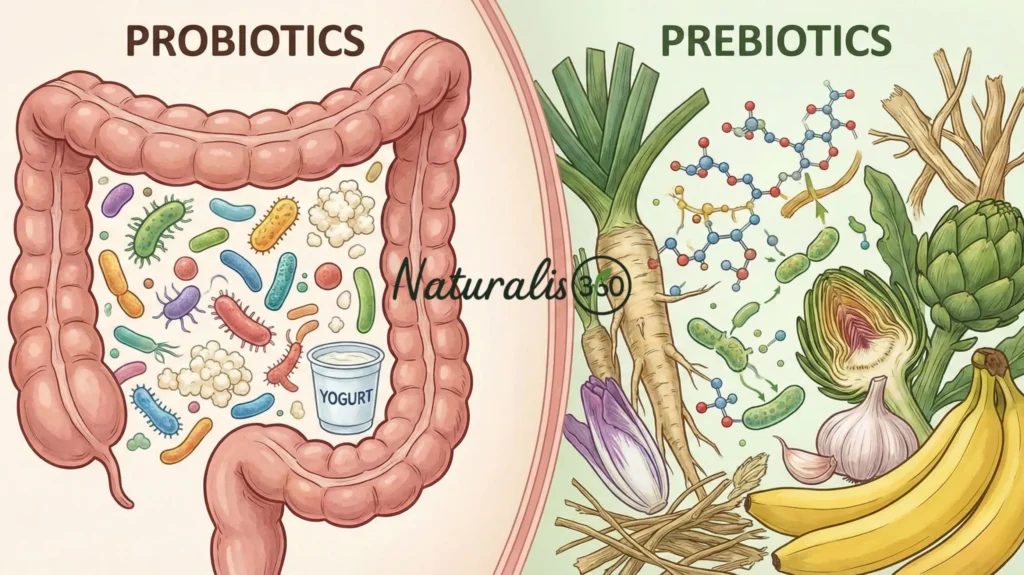
How Probiotics and Prebiotics Work Inside Your Gut
Your gut microbiome is a living ecosystem made up of trillions of microorganisms. Every meal you eat, every stressful day, and every night of poor sleep influences how this ecosystem behaves.
What Probiotics Do
Probiotics are live microorganisms that help restore and maintain microbial balance. When taken consistently, clinically studied probiotic strains can:
- Improve digestion and nutrient absorption
- Reduce bloating, gas, and irregularity
- Strengthen the intestinal barrier
- Support immune response
- Produce beneficial compounds like short-chain fatty acids (SCFAs)
These bacteria are especially helpful after antibiotics, periods of high stress, illness, or long-term poor diet — situations where beneficial microbes tend to decline.
What Prebiotics Do
Prebiotics are non-digestible fibers and compounds that feed beneficial bacteria. Your body doesn’t absorb them — instead, your gut microbes ferment them for energy.
By nourishing probiotics already in your gut, prebiotics help:
- Increase microbial diversity
- Improve probiotic survival and colonization
- Enhance SCFA production
- Support gut lining integrity
- Promote long-term digestive stability
This relationship explains why the probiotics vs prebiotics debate isn’t really an “either/or” — both are essential.
Probiotics vs Prebiotics: Why You Need Both
One of the most common gut-health mistakes is taking probiotics without feeding them.
Probiotics introduced into a gut environment lacking prebiotics often struggle to survive. Without fuel, many strains simply pass through the digestive tract without delivering lasting benefits.
Prebiotics, on the other hand, support both:
- The probiotics you consume
- The beneficial bacteria already living in your gut
Together, probiotics and prebiotics form a synergistic system that supports digestion, immunity, metabolic health, and even mood via the gut–brain axis.
This is why many experts now recommend combining both, either through diet or through thoughtfully designed supplements.
🔗 Suggested Reading: Probiotics, Prebiotics & Postbiotics: The Complete Guide to Gut Support
Natural Food Sources of Probiotics and Prebiotics
Food remains a powerful foundation for microbiome health, though consistency and tolerance vary from person to person.
Probiotic-Rich Foods
- Yogurt with live cultures (best seller on Amazon)
- Kefir (best seller on Amazon)
- Sauerkraut
- Kimchi
- Kombucha (best seller on Amazon)
- Tempeh and miso
These foods introduce live bacteria but can vary widely in strain diversity, potency, and survivability.
Prebiotic-Rich Foods
- Garlic and onions
- Leeks and asparagus
- Slightly green bananas
- Oats
- Chicory root and inulin
- Jerusalem artichokes
While helpful, many people struggle to consume enough prebiotics daily — especially those with sensitive digestion.
Supplements That Combine Probiotics and Prebiotics
For people dealing with bloating, irregular digestion, or long-standing gut imbalance, combination supplements (often called synbiotics) offer a more consistent solution.
High-quality synbiotic formulas typically include:
- Clinically studied probiotic strains
- Gentle, well-tolerated prebiotic fibers
- Delayed-release capsules to protect bacteria
- Transparent labeling and testing
This approach removes guesswork and ensures probiotics actually receive the support they need to function.
Where PrimeBiome Fits In
PrimeBiome is designed specifically for people who want both probiotic and prebiotic support in one daily formula — without juggling multiple supplements.
By combining carefully selected probiotic strains with targeted prebiotic fibers, PrimeBiome supports:
- Microbial balance
- Digestive comfort
- Reduced bloating
- Long-term microbiome resilience
For those who prefer a streamlined routine, this all-in-one approach can be easier to maintain — and more effective over time.
Final Thoughts: Probiotics vs Prebiotics Isn’t a Competition
The question isn’t probiotics vs prebiotics — it’s how well they work together.
Probiotics introduce beneficial bacteria.
Prebiotics help those bacteria survive, multiply, and thrive.
When combined thoughtfully, they create a healthier gut environment that supports digestion, immunity, and overall wellness. Whether you choose food-based strategies, individual supplements, or an all-in-one formula like PrimeBiome, consistency and balance matter more than perfection.