
Updated on december 20, 2025
Gut Probiotics depend on far more than just digestion. Your gut microbiome acts as a central control system influencing immunity, metabolism, inflammation, and even mental clarity. As awareness around gut health grows, terms like probiotics, prebiotics, and postbiotics appear everywhere — yet many people still don’t understand how they differ, how they work together, or how to use them correctly.
This guide breaks down probiotics, prebiotics, and postbiotics in a clear, practical way — showing how each one supports gut health, why they matter, and how to choose the right approach for long-term digestive balance rather than short-term relief.
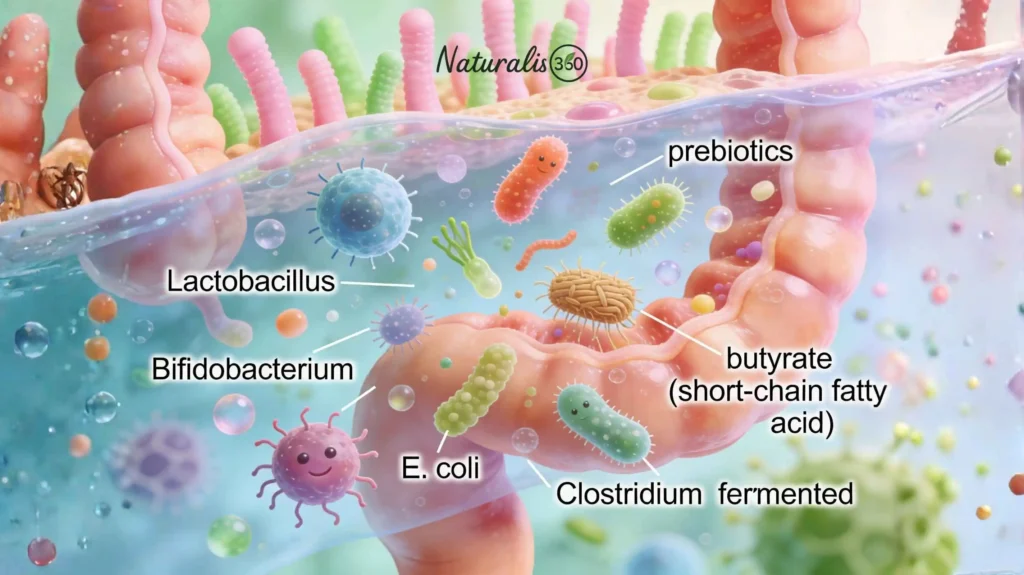
What Each One Does in Your Gut – Gut Probiotics
Although they sound similar, probiotics, prebiotics, and postbiotics perform distinct roles inside the gut — and understanding those roles is key to improving gut health effectively.
Probiotics are live microorganisms that help repopulate beneficial bacteria in the digestive tract. Specific strains of Lactobacillus, Bifidobacterium, and Bacillus can support digestion, reinforce the intestinal barrier, and crowd out harmful microbes when consumed in adequate amounts. Their impact depends heavily on strain selection, dosage, and survival through stomach acid.
Prebiotics, on the other hand, are not bacteria at all. They are fermentable fibers — such as inulin, FOS, and GOS — that serve as food for beneficial microbes. Without enough prebiotics, probiotics struggle to survive or provide lasting benefits. Prebiotics are foundational for gut health because they support microbial diversity over time.
Postbiotics are the bioactive compounds produced when probiotics ferment prebiotics. These include short-chain fatty acids (like butyrate), peptides, enzymes, and microbial metabolites. Postbiotics directly support gut lining integrity, immune signaling, and inflammation regulation — even without live bacteria present.
Together, these three components form the biological foundation of a resilient gut ecosystem.
🔗 Suggested Reading: Probiotics vs Prebiotics: What’s the Difference
How They Work Together for Better Digestion – Gut Probiotics
Gut health improves most effectively when probiotics, prebiotics, and postbiotics work as a system, not in isolation.
Probiotics introduce beneficial strains, but without sufficient fuel, many strains fail to colonize. Prebiotics provide that fuel, allowing beneficial bacteria to grow, multiply, and compete against harmful microbes. As this fermentation process occurs, postbiotics are produced — delivering direct benefits to gut lining cells and immune pathways.
This creates a self-reinforcing cycle:
- beneficial bacteria thrive,
- microbial diversity increases,
- inflammation decreases,
- digestion becomes more efficient.
Because of this synergy, many modern gut health supplements now combine probiotics and prebiotics (synbiotics), and some also include postbiotic compounds to enhance results.
Natural Food Sources vs Supplements
Food should always be the foundation of gut health — but supplements can play an important supporting role, especially when symptoms persist or dietary intake is inconsistent.
Fermented foods like yogurt, kefir, sauerkraut, kimchi, and miso naturally provide probiotics, though their strain diversity and potency vary widely. Many do not contain clinically studied strains in meaningful amounts.
Prebiotic fibers are found in foods such as onions, garlic, asparagus, bananas, legumes, and whole grains. However, modern diets often fall short in fiber intake, limiting prebiotic availability.
Postbiotics are mostly produced internally through fermentation, but standardized supplements can provide more predictable exposure to beneficial metabolites.
Supplements offer advantages such as:
- precise strain identification,
- standardized CFU counts,
- targeted fiber dosing,
- improved stability and delivery,
- measurable postbiotic content.
For many people, the best gut health strategy combines diverse foods with targeted supplementation.
Choosing the Right Formula (What to Look For)
Not all gut health supplements deliver the same results. Choosing the right formula requires attention to quality and transparency.
Look for:
- Strain specificity (exact bacterial strains listed)
- Appropriate CFU range rather than megadoses
- Well-studied prebiotic fibers
- Postbiotic standardization
- Delayed-release or acid-resistant delivery
- Third-party testing
Avoid vague labels that hide strain identity or rely solely on marketing terms.
Trusted Probiotic, Prebiotic & Synbiotic Formulas We Recommend
When choosing gut health supplements, effectiveness isn’t just about high numbers on the label — it’s about formula quality, strain diversity, survivability, and consistency. Below are the probiotic, prebiotic, synbiotic, and postbiotic options we trust most based on formulation standards, user feedback, and overall reliability.
Probiotics – Help Replenish Beneficial Bacteria
High-quality probiotics introduce beneficial bacterial strains that support microbial balance, digestive comfort, and regularity. A diverse, well-designed probiotic blend can serve as a strong foundation for gut health support, especially when digestive symptoms or imbalance have been present for some time.
One of the most consistently trusted options is:
👉 Physician’s Choice Probiotics 60 Billion CFU
This multi-strain formula includes organic prebiotics, is designed to survive stomach acid, and supports both digestive and immune health — making it a reliable daily probiotic choice.
Prebiotics – Fuel for Beneficial Bacteria
Prebiotics are essential for long-term gut balance because they feed and stabilize beneficial bacteria already living in the gut. Without sufficient prebiotic fiber, probiotic strains may struggle to thrive.
A popular and well-reviewed option is:
👉 BioSchwartz Prebiotics for Advanced Gut Health
This formula supports microbial diversity, bowel regularity, and digestive comfort, making it a useful addition for those increasing fiber intake gradually.
All-in-One Synbiotics (Probiotic + Prebiotic)
For those who prefer a simplified approach, synbiotic formulas combine probiotics and prebiotics in a single product — helping introduce beneficial strains while providing the fuel they need to function effectively.
A top-tier synbiotic option is:
This advanced blend combines 24 probiotic strains with targeted prebiotic support and is designed for stability, survivability, and long-term microbiome support.
Postbiotics – Direct Support for Gut Lining & Inflammation
Postbiotics are beneficial compounds produced by bacterial fermentation, such as short-chain fatty acids (SCFAs). They support gut lining integrity, immune regulation, and inflammation balance — even without introducing live bacteria.
One well-known postbiotic-focused option is:
👉 BodyBio Calcium Magnesium Butyrate
This supplement provides butyrate support, which plays a key role in nourishing intestinal cells and supporting gut barrier health.
💡 Editorial Note:
Some people prefer building gut support step-by-step using individual supplements, while others opt for streamlined, all-in-one formulas that simplify daily routines. Both approaches can be effective — the best choice depends on symptoms, tolerance, and consistency. If this describes your situation, PrimeBiome may be the simplified gut support solution you’ve been looking for.
When to Add Digestive Enzymes to the Mix
Digestive enzymes are not microbiome modifiers, but they can be highly complementary.
Enzymes assist in breaking down proteins, fats, carbohydrates, and lactose, reducing digestive strain during meals. For people experiencing bloating, heaviness, or discomfort after eating, enzymes can improve nutrient absorption and ease symptoms — creating a more favorable environment for microbiome recovery.
🔗 Suggested Reading: Gut Health 101 – How to Improve Digestion and Restore Your Microbiome
Final Thoughts – Synergy for a Balanced Gut
Gut health is not built on a single supplement or food — it’s the result of a balanced, adaptive ecosystem. Probiotics, prebiotics, and postbiotics each support different layers of that system, and when used together, they create a powerful foundation for digestion, immunity, and long-term vitality.
For those seeking simplified support, formulas like PrimeBiome combine probiotic strains with prebiotic fibers to support microbiome balance in a single daily routine — especially when paired with gut-friendly nutrition and lifestyle habits.
A healthy gut isn’t about quick fixes. It’s about restoring balance from the inside out.